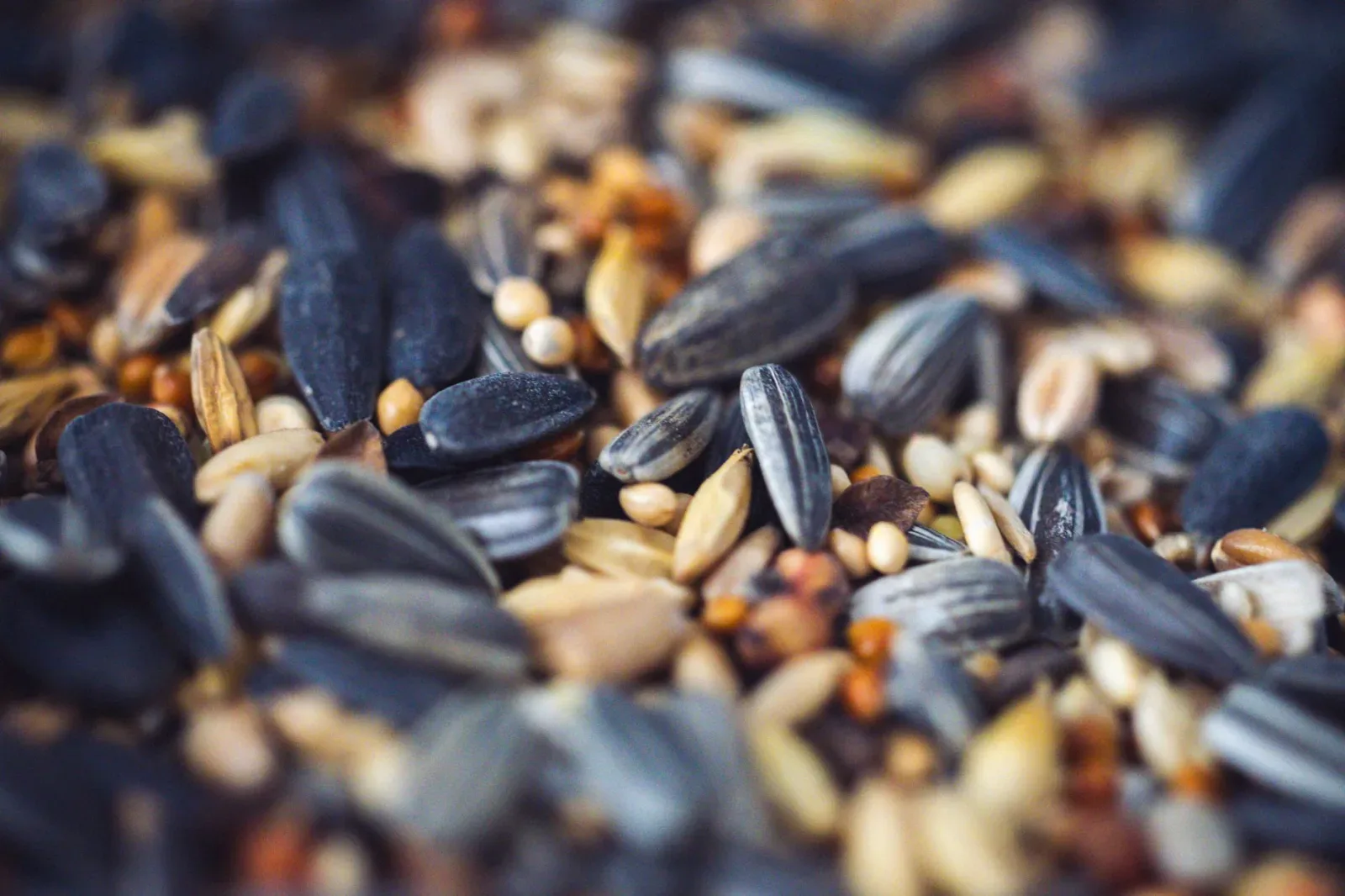
Most pet birds are sold with a bag of seed, and many owners feed nothing else for years. Unfortunately, an all-seed diet is one of the leading causes of disease and shortened lifespan in pet birds — it is too high in fat and missing many essential nutrients.
The problem with seed
Seeds are like fast food for birds: tasty, fatty and nutritionally incomplete. A seed-only diet commonly leads to obesity, fatty liver disease, vitamin A and calcium deficiencies, and a dull, poor-quality coat of feathers. Birds also pick out their favourite fatty seeds and leave the rest, making the imbalance worse.
A better diet
- Pellets: a quality formulated pellet should make up the bulk of most parrots' and budgies' diets — it is nutritionally balanced.
- Fresh vegetables and leafy greens: offer daily for vitamins and variety.
- Fruit: in smaller amounts as it is sugary.
- Seed: as an occasional treat, not the staple.
Switching safely
Birds can be stubborn about new food, so convert gradually over weeks — mix pellets with seed and slowly shift the ratio, and offer vegetables in different forms. Never starve a bird onto a new diet. If your bird resists, ask your avian vet for a safe conversion plan.
Vegetables and fruits to prioritise or avoid
Dark leafy greens, carrots, and bell peppers are reliable favourites across most species. Avocado, chocolate, caffeine, and onion are toxic to birds and should never appear on the vegetable plate, even as a well-meaning "just a taste."