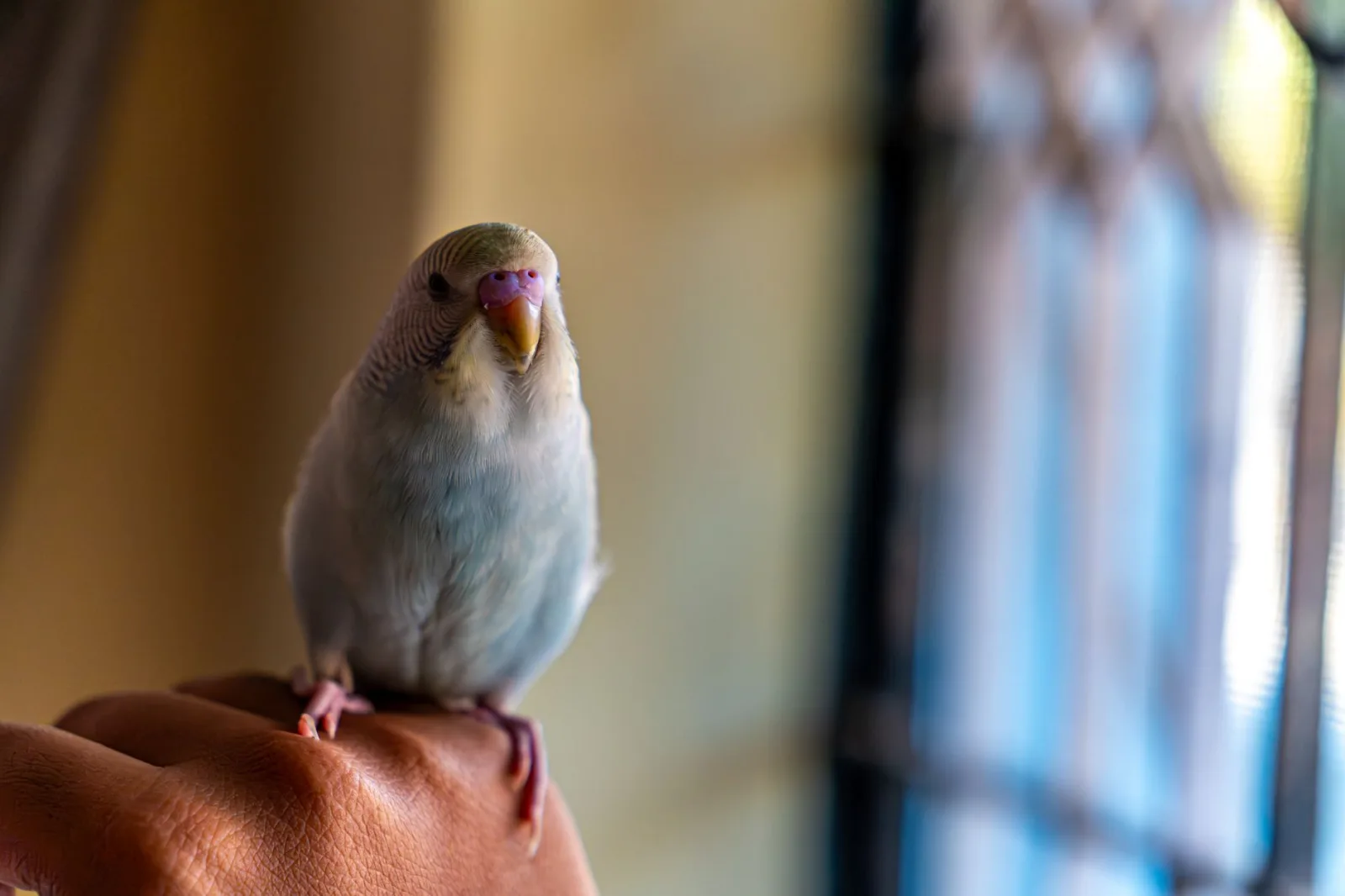
The ‘step up’ — where a bird willingly steps onto your finger or hand — is the single most useful behaviour you can teach. It makes handling safe and calm, helps in emergencies, and builds the trust that all other training depends on.
Build trust first
A bird will only step up willingly if it trusts you, so start by spending calm time near the cage and offering treats by hand. Never grab, chase or force a frightened bird — it destroys trust and can make the bird hand-shy for good.
Teaching the step up
- With a calm bird, gently press a finger or hand against its lower chest, just above the legs.
- This naturally encourages the bird to step up to keep its balance; say a cue like ‘step up’ as it does.
- Reward immediately with praise or a small treat.
- Repeat in short, positive sessions, gradually building confidence.
Using step up beyond training sessions
Once reliable, ask for a step up during everyday moments — before cage cleaning, before moving the bird to a different room — so the cue becomes a normal, low-stakes part of daily life rather than something only practised in formal sessions.
Keep it positive
Always use reward-based methods and end on a success. Keep sessions short to avoid frustration, and go at the bird's pace. Once the step up is reliable, it becomes the basis for further training and for safely moving your bird around the home — calmly and without stress for either of you.