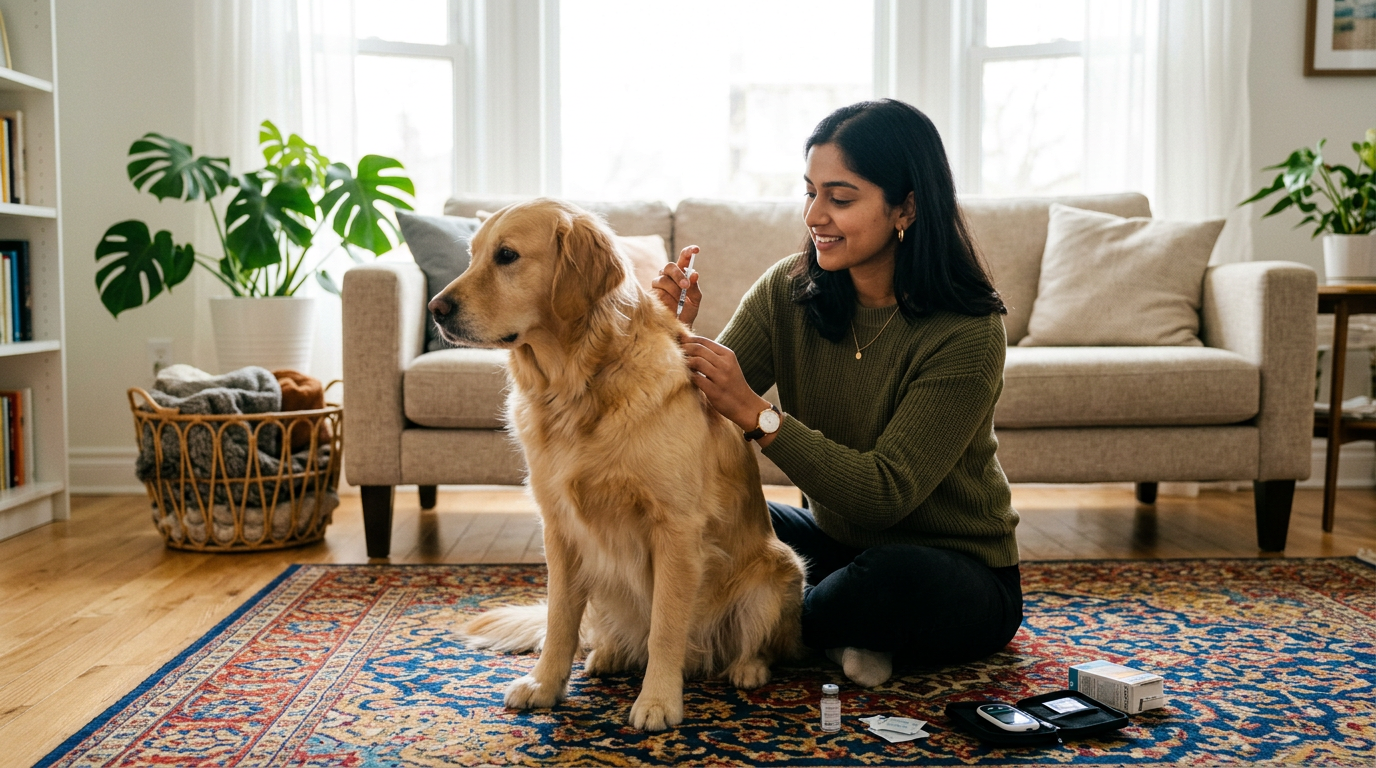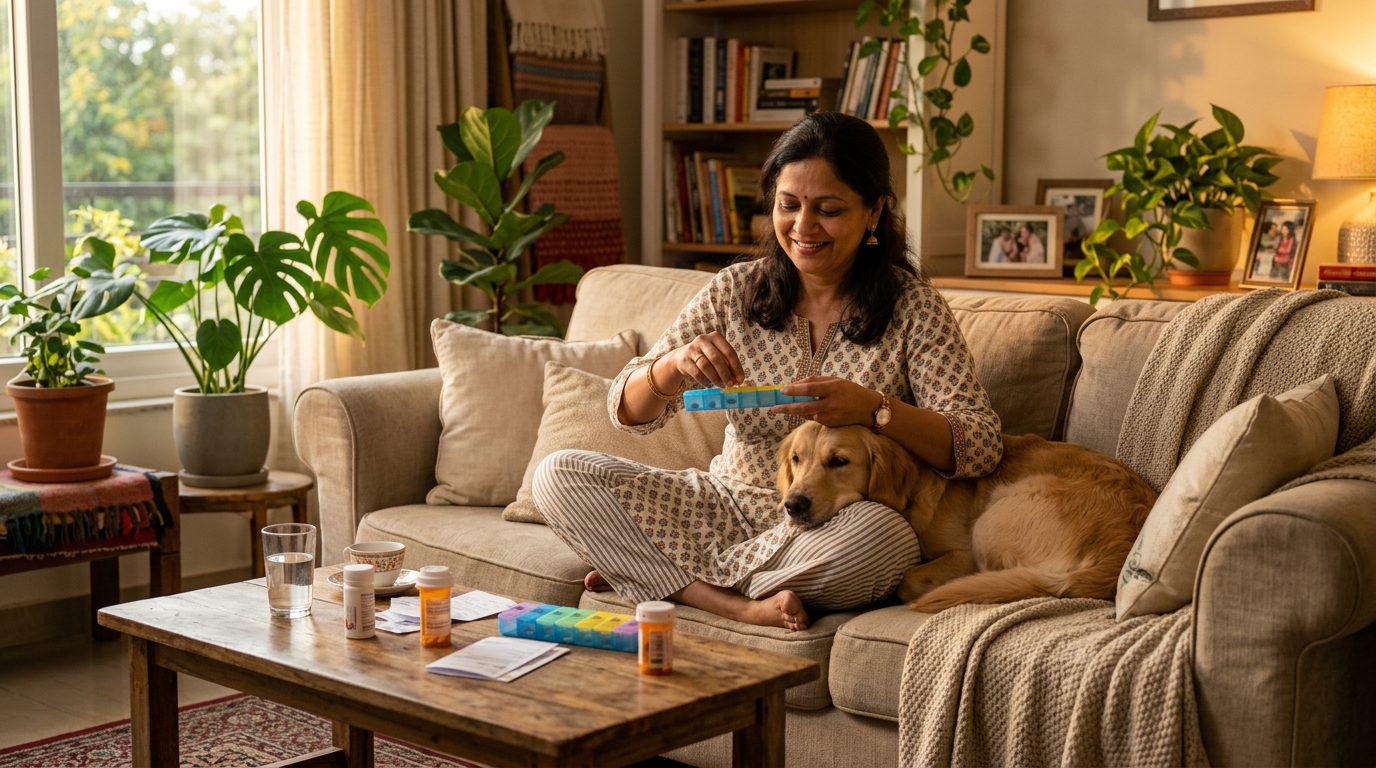
Whether it's a thyroid pill, a joint supplement, or a daily insulin shot, long-term treatments only work if you stay consistent.
Build it into an existing routine
Pair medication time with something you already do every day — morning coffee, evening walk, breakfast prep. Pinning the new habit to an old one makes it stick.
Plan for refills
Set a reminder a full week before you'll run out. Vet pharmacies don't always have your specific medication in stock; lead time prevents skipped doses.
Making pills easier to give
Pill pockets, a small ball of wet food, or a dab of peanut butter (checked for xylitol first) work for most dogs. Cats are pickier — ask your vet or pharmacist whether the medication can be compounded into a flavoured liquid or transdermal gel if pilling becomes a daily battle. Never crush tablets without checking first; some coatings exist specifically to protect the stomach or control release timing.
Storage and travel
Keep medications in their original labelled containers, away from heat and humidity, and out of reach of curious pets and children. If you travel, pack a few extra days' worth beyond the trip length in case of delays, along with a written dosing schedule — useful if anyone else needs to step in and give a dose.
If your pet starts refusing medication that previously went down easily, talk to your vet — taste fatigue is real and there are usually alternatives.