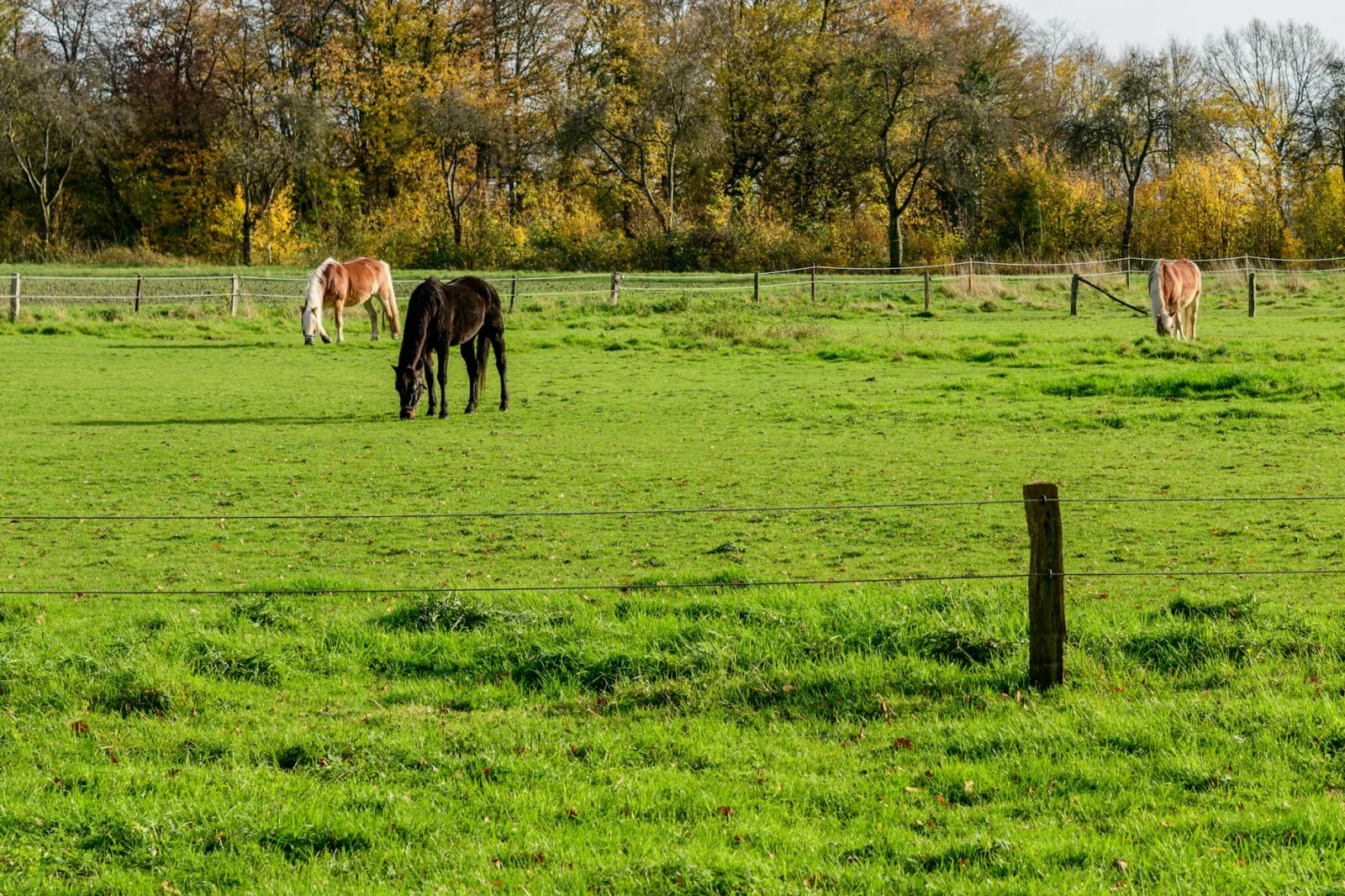
In the wild, horses roam and graze for most of the day. Modern stabling can work against that nature, and horses kept standing in a stable for long hours pay for it in both body and mind. Movement is not a luxury for a horse — it is a need.
The benefits of turnout
- Keeps the gut moving, reducing the risk of colic
- Maintains joint, tendon and hoof health through gentle constant motion
- Reduces stress and stable vices like weaving and crib-biting
- Supports natural social behaviour when turned out with companions
Making it work
Aim for as much daily turnout as your situation allows, ideally with safe equine company. Where space or grazing is limited, regular in-hand walking, lunging or ridden exercise helps fill the gap, but it does not fully replace free movement. Even a small, safe paddock for a few hours makes a difference.
Manage the grazing
Watch intake on rich pasture, especially for ponies and good-doers prone to laminitis — strip grazing or a grazing muzzle can help. Provide water and shade or shelter in the field. A horse that moves freely every day is calmer, sounder and easier to work with.
Introducing turnout to a stall-bound horse
A horse coming back from injury or one unused to turnout can become overexcited with sudden freedom, risking a re-injury. Building up turnout time gradually, sometimes starting in a small yard rather than a full paddock, gives them a safer transition back to normal movement.