For a stabled horse, the stall is home for many hours a day. A well-designed, well-managed stable keeps the horse safe from injury, comfortable to rest in, and healthy in its airways and feet.
Space and safety
- The stall should be large enough for the horse to turn around, lie down and get up comfortably.
- Remove sharp edges, protruding nails and anything a horse could catch itself on.
- Use secure, horse-proof latches the horse cannot open.
- Ensure good ventilation — stale, ammonia-heavy air damages the airways.
Bedding and management
Provide a deep, clean, dry bed of straw, shavings or another suitable material to encourage the horse to lie down and to protect joints and hocks. Muck out daily, removing droppings and wet bedding, to keep ammonia down and hooves healthy. Always provide clean water and forage.
Don't forget movement and company
Even the best stable is no substitute for turnout and the company of other horses. Horses are social, moving animals, so combine good stabling with daily turnout and the sight of other horses to prevent boredom and stable vices.
Designing sightlines between stalls
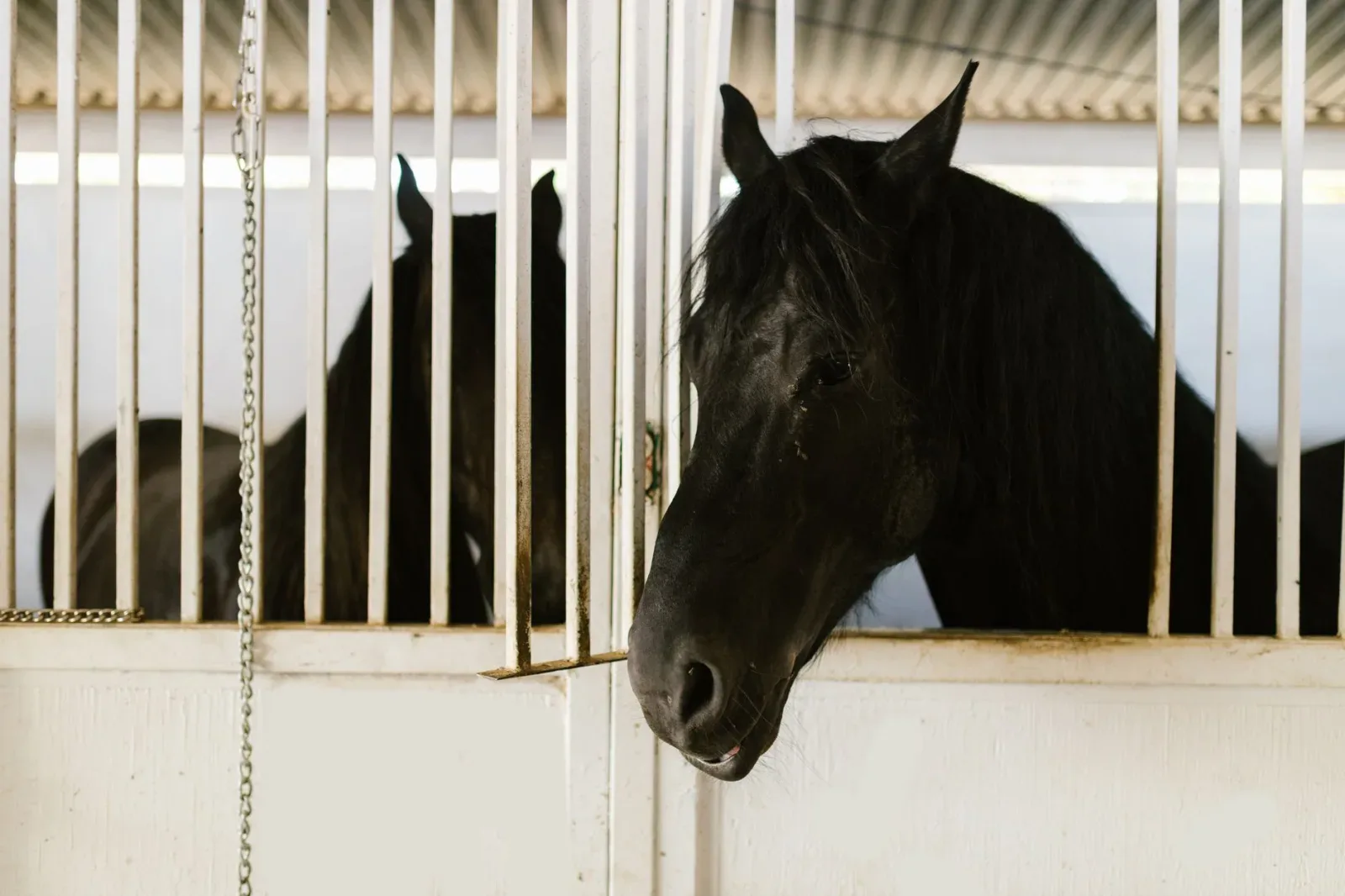
Where possible, stall layouts that let horses see and interact with neighbours — grille partitions rather than solid walls — noticeably reduce stress and stable vices compared with fully isolated stalls, even without direct physical contact.