The right brush depends on the coat. The wrong brush either does nothing or hurts.
Match the tool to the coat
- Short, smooth coats (Beagles, Boxers) — a rubber curry brush or soft bristle brush
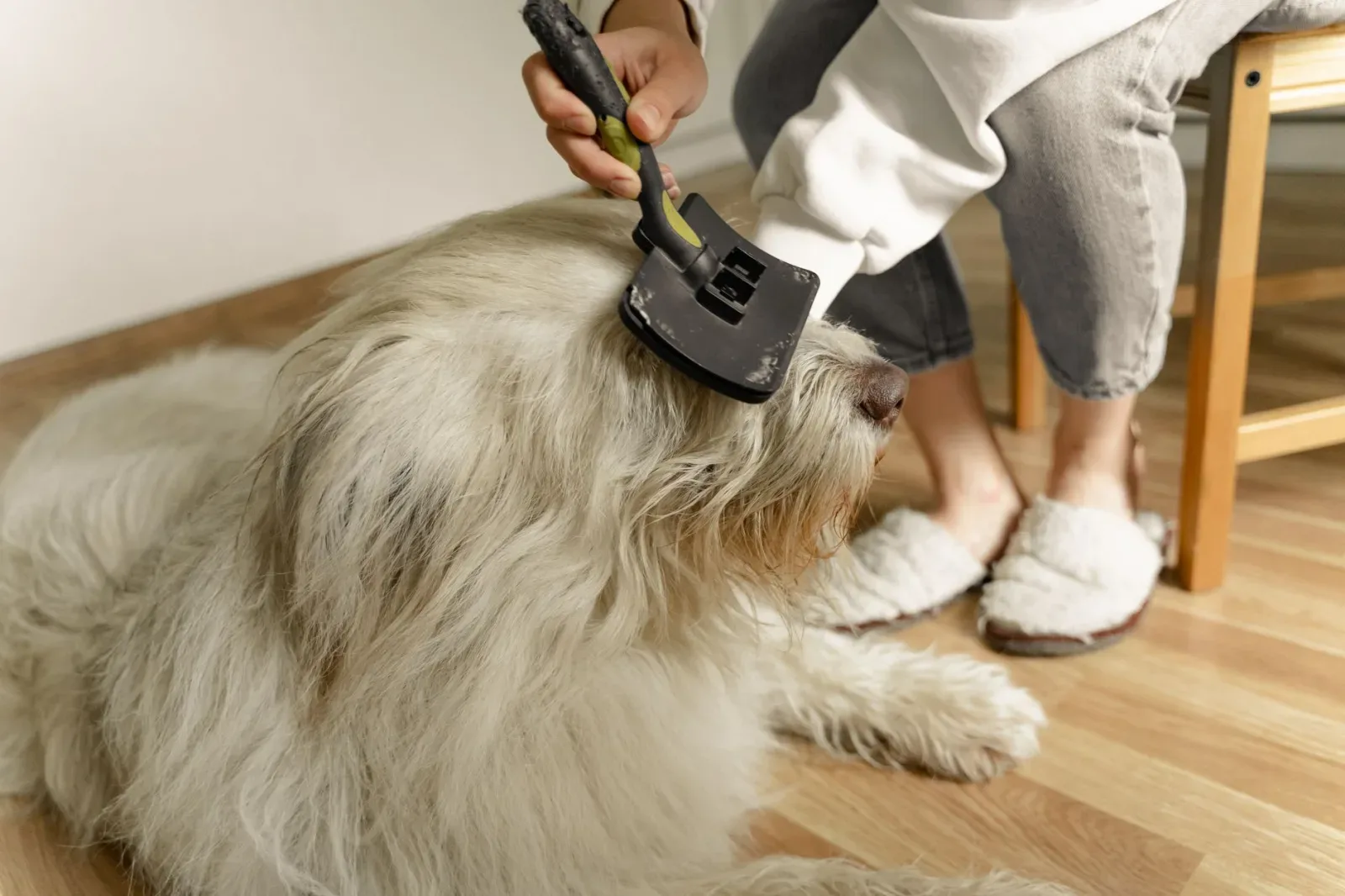
- Double coats (Huskies, Retrievers) — an undercoat rake and a slicker
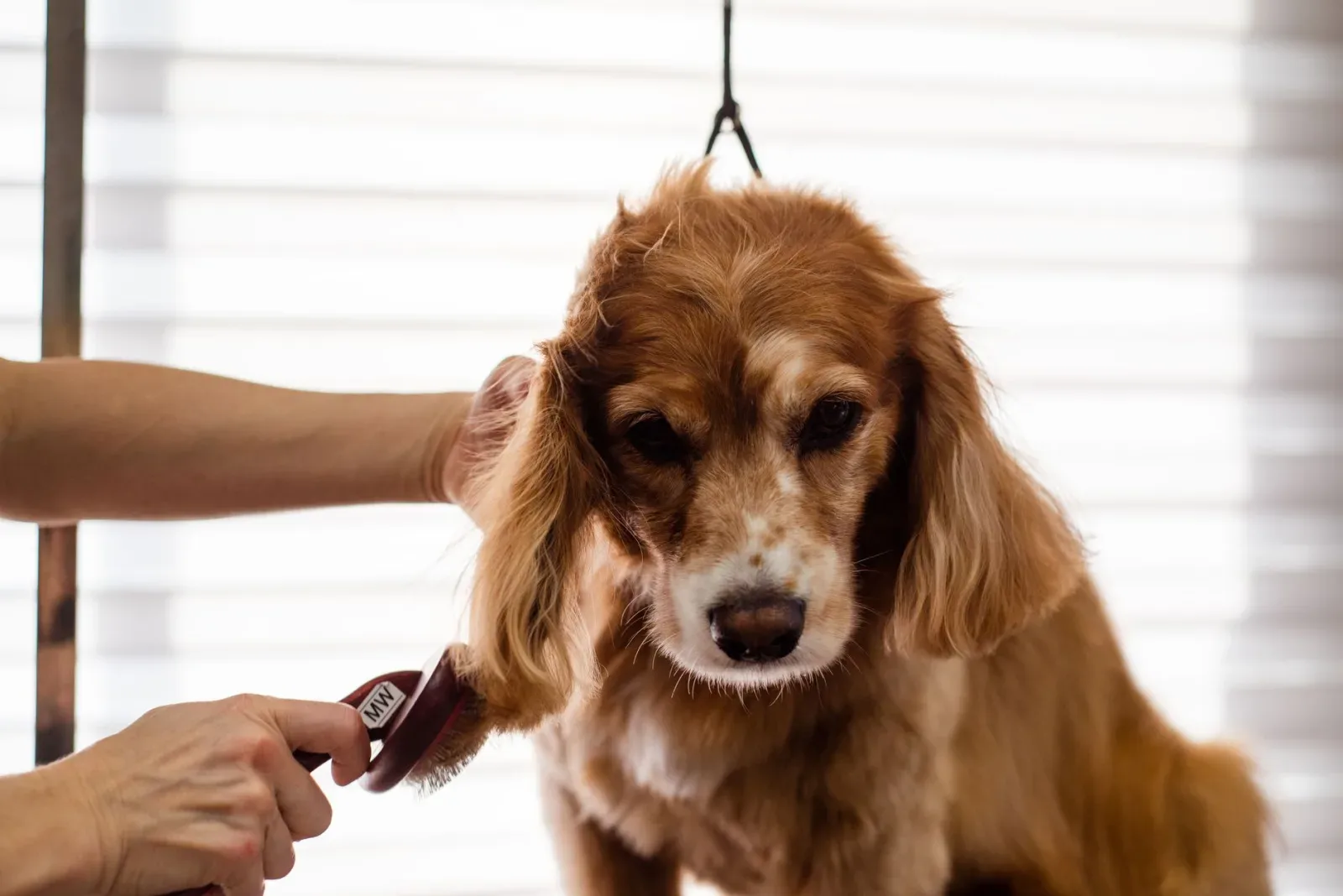
- Long, silky coats (Yorkies, Persians) — a pin brush and a fine-toothed comb
- Curly coats (Poodles, Doodles) — a slicker brush plus regular professional trims
How often
Short coats: weekly. Double coats: 2–3 times a week, daily during shedding seasons. Long and curly coats: daily to prevent mats.
Brushing technique that actually reaches the undercoat
Brushing only the top layer leaves the dense undercoat matting underneath, invisible until it's a real problem. Work in sections, brushing against the direction of growth first to lift the undercoat, then with the growth to smooth it back down — a single pass over the top does very little on a double coat.
Finding a mat before it's a problem
Run a comb through weekly, focusing on friction points — behind the ears, in the armpits, and around the collar line. A mat caught small can usually be worked out with a detangling spray and patience; one left for weeks often has to be shaved out.
If a brush is pulling instead of gliding, switch tools — don't push harder.