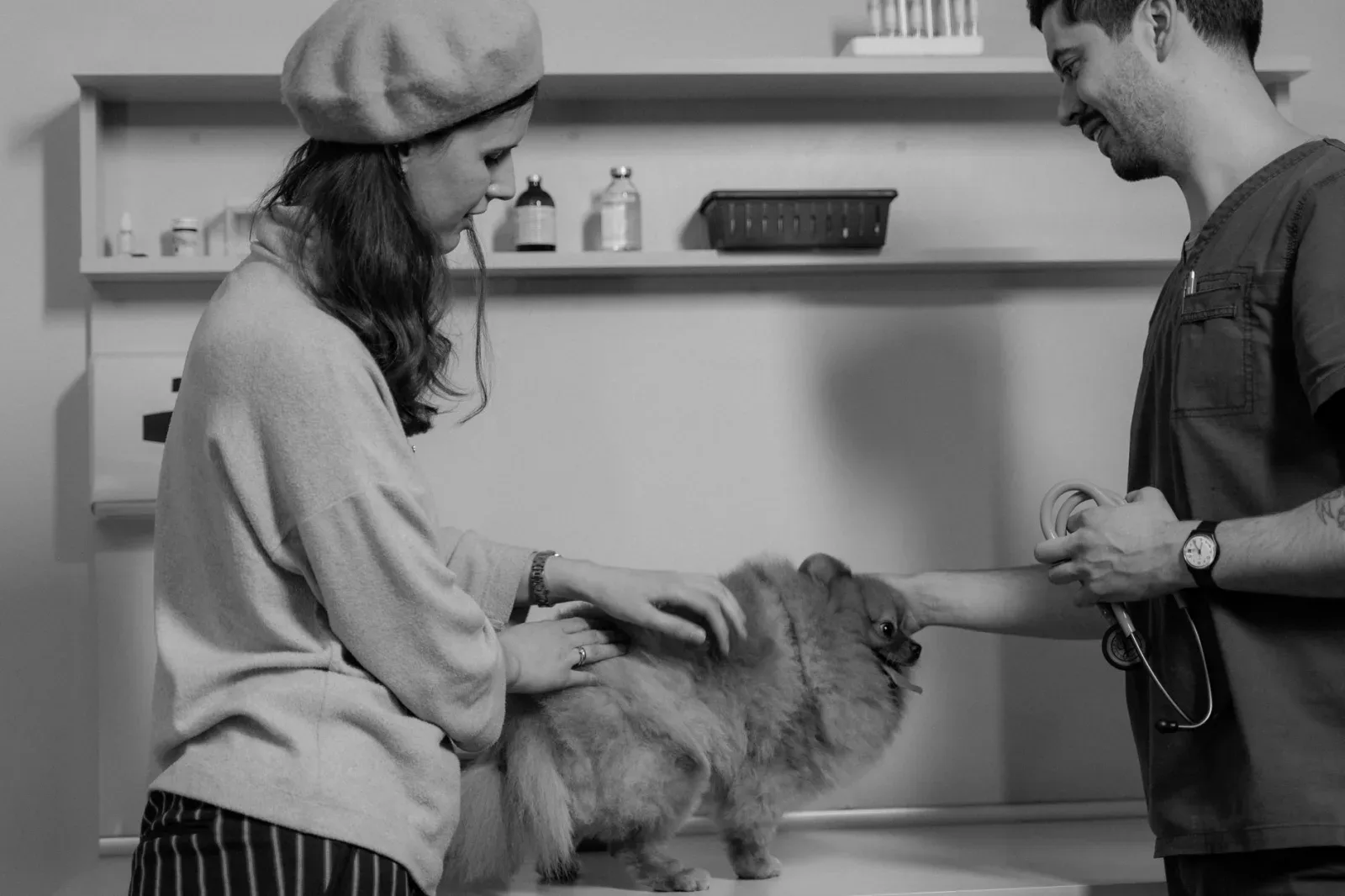
Your vet is the single most important professional relationship you'll have as a pet parent. Choose one before you need one urgently.
Visit before you book
Stop by the clinic to see how staff handle pets in the waiting room. Calm, low-stress environments are a sign of a clinic that takes animal comfort seriously. Notice whether the space is clean, whether cats and dogs are kept separated or calm around each other, and how the front desk speaks to worried owners.
Ask the right questions
- What are their after-hours emergency arrangements?
- Do they have experience with your specific breed or species?
- How do they handle anxious or reactive pets?
- Can they refer you to a specialist if something more serious comes up?
- What do routine visits, vaccinations, and common procedures typically cost?
What to bring to the first appointment
Carry any medical records or vaccination history from the breeder, shelter, or previous owner, a stool sample if your vet requests one for a deworming check, and a list of questions so you don't forget them under a wriggling puppy or a hissing cat. It also helps to note any behaviour you've noticed in the first few days — appetite, energy, litter habits — so the vet has a real baseline, not just a snapshot.
Building the relationship long-term
Try to see the same vet for every routine visit rather than whoever is free. Continuity means they'll notice subtle changes in your pet's weight, coat, or behaviour that a new face might miss.
Book a wellness visit within two weeks of bringing your pet home, even if they seem perfectly healthy. It establishes a baseline and gives your pet a positive first vet experience — one that pays off every time you walk through that door for the next ten-plus years.