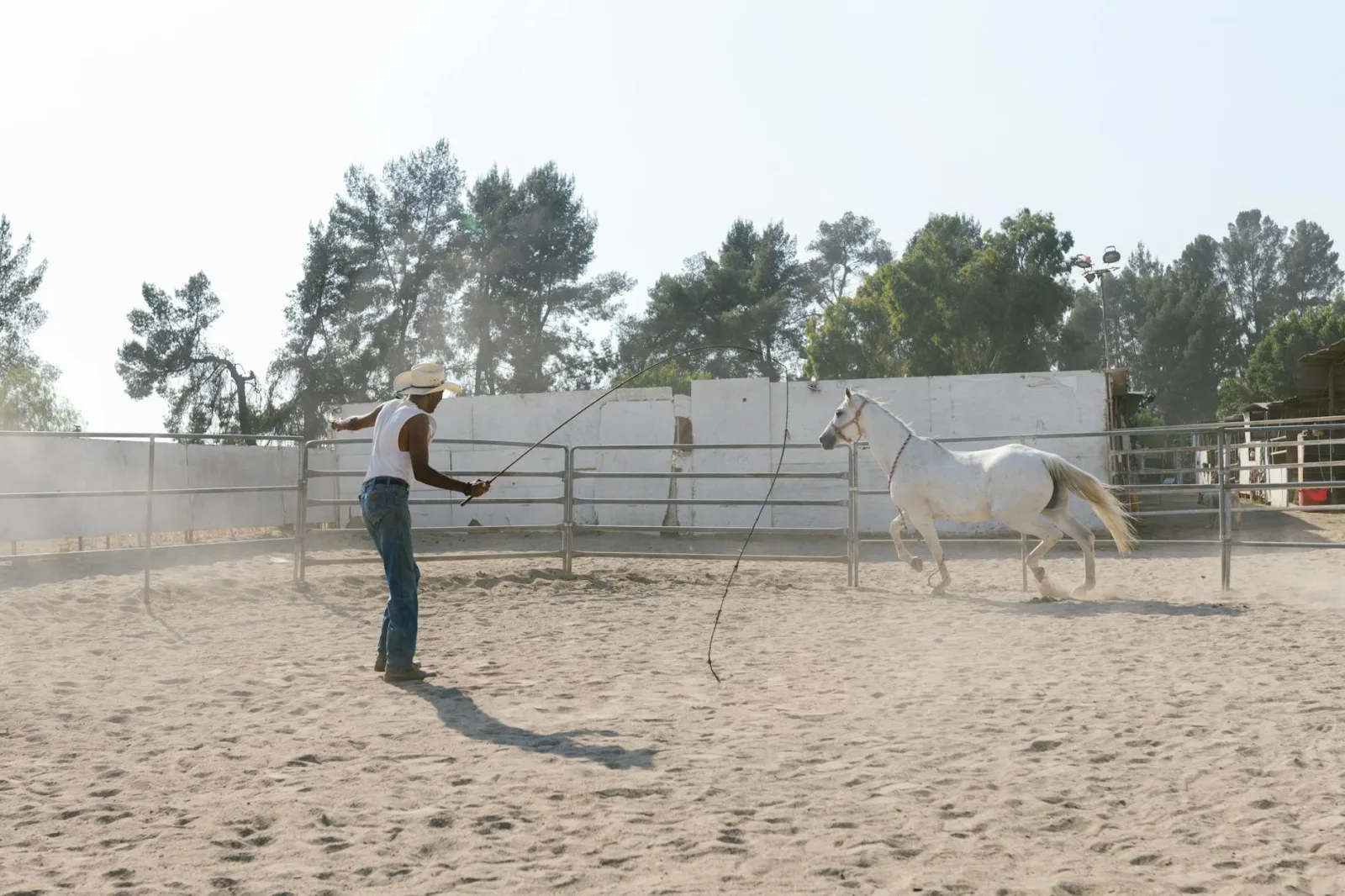
The relationship you have with a horse on the ground carries straight into the saddle. Groundwork — leading, lungeing, yielding and standing calmly — builds communication, trust and respect before a rider is ever involved, and it is invaluable for young, green or anxious horses.
What groundwork teaches
- To move away from gentle pressure and stop on cue
- To stand still calmly for handling, tacking up and the farrier
- To focus on the handler despite distractions
- To build confidence with new objects and situations
Principles that work
Horses learn from the release of pressure, not from the pressure itself, so reward the smallest try by softening immediately. Be consistent, calm and clear; horses read body language acutely and feed off your energy. Keep sessions short and end on a good note — a few focused minutes beat a long, frustrating session.
Patience over force
Never train through fear or force; it creates a tense, unpredictable horse. A horse that respects and trusts you on the ground is safer to handle and far more willing under saddle. If you are unsure, work with an experienced trainer who uses kind, pressure-and-release methods.
Revisiting groundwork with an experienced horse
Groundwork isn't only for young or green horses — returning to these exercises periodically with a well-trained horse re-establishes clear communication and often resolves subtle under-saddle issues that seem to appear out of nowhere but actually trace back to a gap in ground manners.