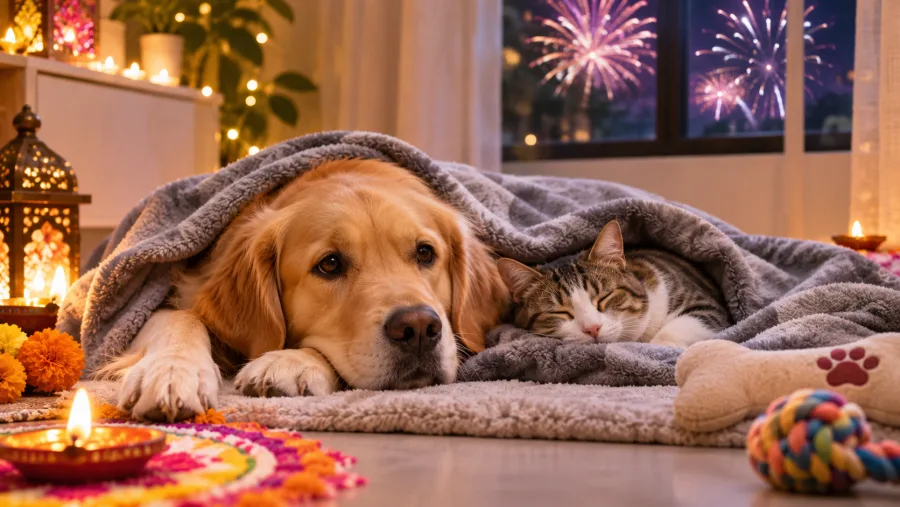
Diwali brings lights, celebrations, sweets, and family gatherings. However, for many pets, the festival can also mean frightening noises, sudden flashes, and unfamiliar activity.
Is your dog scared of crackers during Diwali? Does your cat hide when fireworks begin? These reactions are common. Dogs and cats can become distressed by unexpected loud sounds, especially when firecrackers continue for several hours.
The good news is that thoughtful preparation can help. From creating a quiet room to adjusting walking schedules, small changes can make a meaningful difference.
This Diwali 2026 pet safety guide explains how to calm anxious dogs and cats, recognise warning signs, prevent escapes, and protect pets from common festival hazards. It also covers firecracker timings in India and ways to support community animals.
Why Do Firecrackers Scare Dogs and Cats So Much?
Dogs and cats have sensitive hearing. A sudden explosion that sounds manageable to a person may be overwhelming to an animal.
Firecrackers create several frightening experiences at once:
-
Unexpected noise: Sudden bangs make it difficult for pets to predict what will happen next.
-
Bright flashes: Rapid flashes can startle animals, especially in dark rooms.
-
Vibrations: Powerful fireworks can cause doors, windows, and floors to vibrate.
-
Unfamiliar smells: Smoke and burning chemicals may cause additional discomfort.
-
Repeated disturbances: Several days of fireworks can disrupt normal sleeping and eating routines.
Some pets recover quickly after a loud sound. Others remain anxious long after the noise stops.
A dog may associate evening walks with frightening explosions, while a cat may refuse to leave its hiding place.
Never punish your pet for these reactions. Fear is not disobedience.
Instead, focus on creating a predictable, secure environment.
Diwali 2026 Dates: When Will Firecrackers Be Loudest?
Diwali falls on Sunday, 8 November 2026. However, celebrations and fireworks may begin earlier and continue after the main festival.
Knowing the schedule helps pet parents prepare.
| Date | Festival or period | Pet safety preparation |
| 2–5 November | Early Diwali preparations | Set up a safe room and check identification |
| 6 November | Dhanteras | Keep pets away from decorations, electrical wires, and visitors |
| 7 November | Choti Diwali celebrations | Complete outdoor walks early and secure doors |
| 8 November | Main Diwali | Keep pets indoors and supervised during fireworks |
| 9 November | Post-Diwali | Check for smoke exposure, debris, and unusual behaviour |
| 10 November | Govardhan Puja | Maintain precautions if celebrations continue |
| 11 November | Bhai Dooj | Monitor pets around guests and open entrances |
Festival observances may vary by region and local tradition.
What Time Are Firecrackers Allowed During Diwali 2026?
According to the Supreme Court order reported on 2 November 2026, Delhi-NCR permits certified green firecrackers on 7 and 8 November during these periods:
-
Morning: 6:00 AM to 7:00 AM
-
Evening: 8:00 PM to 10:00 PM
The order also restricts fireworks near hospitals, healthcare centres, old-age homes, educational institutions, and notified silence zones. The complete Delhi-NCR ban is scheduled to resume on 9 November.
These timings should not be treated as a uniform rule for every Indian state. Pet parents in Haryana, Rajasthan, Maharashtra, Gujarat, and other states should check the latest local government and police notifications.
Even where restrictions apply, unexpected fireworks may occur outside permitted hours.
Pet safety tip: Plan as though loud noises could begin before sunset and continue after the expected window.
Signs of Firecracker Anxiety in Dogs vs Cats
Pets communicate fear through behaviour. Recognising early signs can help you respond before their anxiety becomes severe.
| Signs in dogs | Signs in cats |
|---|---|
| Shaking or trembling | Hiding under furniture |
| Excessive barking or whining | Flattened ears |
| Heavy panting | Dilated pupils |
| Pacing around rooms | Reduced appetite |
| Drooling or restlessness | Excessive grooming |
| Trying to escape | Unusual vocalisation |
| Refusing to go outdoors | Avoiding people or other pets |
Some animals become unusually clingy. Others prefer to be left alone.
A normally friendly dog might suddenly refuse food or hide behind furniture. A cat may spend hours inside a wardrobe.
These responses should not be ignored.
Learn more about reading your pet's stress signals to understand changes in behaviour.
Two Weeks Before Diwali: Build a Safe Room and Introduce Sounds Slowly
Ideally, begin preparing several weeks before Diwali. If the festival is only a few days away, focus on comfort and safety rather than rushing any training.
Create a Comfortable Safe Space
Choose a quiet room away from balconies, street-facing windows, and the main entrance.
Include:
-
Your pet's familiar bed or blanket
-
Drinking water and favourite toys
-
Comfortable ventilation and temperature
-
A hiding spot or open crate, if your pet already likes one
-
Soft background music or television
-
A litter box for cats
Close windows and curtains to reduce noise and flashes. Keep the space accessible so your pet can enter or leave voluntarily.
Do not lock a frightened animal inside an unfamiliar crate.
Introduce Firework Sounds Gradually
For future festivals, sound desensitisation may help some pets.
Begin with professionally designed sound recordings at a very low volume while your pet is relaxed. Reward calm behaviour and increase volume only when your pet remains comfortable.
Stop immediately if the animal shows fear.
Severe noise phobias require a veterinary or qualified behaviour professional's guidance. Attempting to desensitise a pet shortly before Diwali may make its fear worse.
Our guide to training a strong-willed or anxious pet provides additional behaviour-management information.
Diwali Night Plan for Dogs: Walks, Meals, Noise Masking, and Staying Calm
A consistent routine can help dogs feel safer during celebrations.
1. Walk Your Dog Before Fireworks Begin
Schedule the main walk during daylight hours, before local fireworks are likely to start.
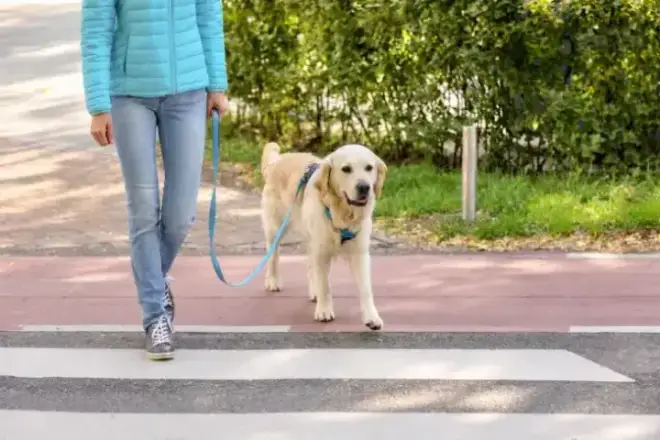
Choose a quieter route, use a well-fitted harness and secure lead, and avoid busy roads or celebration areas.
Never let your dog roam freely during Diwali.
If fireworks have already begun, avoid unnecessary outdoor trips. Arrange a safe toileting alternative if needed.
2. Keep Meals and Activities Familiar
Offer meals at normal times.
Food puzzles, licking mats, or familiar chew toys may help some dogs relax, provided they are safe and supervised.
Do not force food or activities on a frightened animal.
3. Reduce Sudden Noise
Close windows, draw curtains, and use gentle background sounds.
Keep the volume comfortable. Very loud music can create additional stress.
4. Stay Calm and Offer Reassurance
Sit near your dog if it seeks company.
You can speak softly, offer gentle affection, or allow it to rest beside you.
Comforting a frightened dog does not mean rewarding bad behaviour. However, respect its preference if it wants space.
5. Prevent Accidental Escapes
Ask family members and guests to keep doors closed.
Check balcony doors, gates, windows, and building entrances before celebrations begin.
For dogs that panic severely, arrange for a responsible adult to stay home.
Diwali Night Plan for Cats: Hiding Spots, Litter, and Closed Windows
Cats often respond to fireworks by hiding rather than seeking attention.
Allow your cat to choose a secure location, such as a covered bed, cardboard box, or familiar furniture.
Follow these precautions:
-
Keep cats indoors before fireworks begin.
-
Close windows, balconies, and escape routes.
-
Provide hiding spots at different heights.
-
Keep food, water, and litter easily accessible.
-
Avoid forcing cats out of hiding.
-
Keep visiting children from disturbing resting cats.
-
Use familiar blankets and bedding.
-
Maintain the normal feeding routine.
In high-rise apartments, check balcony nets and window screens for gaps. A frightened cat may attempt to escape through a surprisingly small opening.
Do not use essential oils, scented candles, or unapproved calming products around cats. Some substances are harmful to them.
If your cat stops eating, has breathing difficulty, or appears unable to urinate, seek veterinary advice promptly.
Diwali Hazards for Pets: Diyas, Rangoli, Mithai, and Open Doors
Firecrackers are not the only festival danger.
Decorations, food, electrical items, and frequent visitors can also create safety risks.
Diyas, Candles, and Decorative Lights
Keep burning diyas and candles beyond your pet's reach.
Curious cats may knock them over, while dogs may accidentally brush against flames.
Secure decorative lighting and electrical cables. Inspect damaged wires and avoid leaving illuminated decorations unattended.
Rangoli and Decorative Powders
Keep pets away from rangoli made with powders, glitter, chemical colours, or small decorative objects.
Some materials may irritate the skin, eyes, or digestive system if touched or swallowed.
Use pet-safe placement rather than assuming every natural or homemade powder is harmless.
Diwali Sweets and Festive Foods
Indian sweets often contain ingredients that are unsuitable for pets.
Avoid sharing:
-
Chocolate and cocoa-based sweets
-
Sugar-free foods containing xylitol
-
Raisins and grapes
-
Alcohol-containing desserts
-
Very fatty or heavily spiced foods
-
Sweets containing unidentified ingredients
If your pet eats chocolate, raisins, xylitol, or another potentially toxic ingredient, contact a veterinarian immediately. Do not wait for symptoms or attempt home remedies.
Guests, Doors, and Apartment Lifts
During family gatherings, people frequently enter and leave the home.
Assign one family member to monitor entrances.
Place a polite reminder near the door:
"Pet Inside – Please Close the Door Carefully."
In apartment buildings, avoid crowded lifts during peak celebrations if your dog is already anxious.
Secure pets in a separate comfortable room when guests arrive or leave, if that arrangement is familiar and safe for them.
If Your Pet Panics, Bolts, or Gets Hurt: Emergency Steps
Despite careful preparation, frightened animals sometimes escape.
The first few minutes are important.
If Your Dog or Cat Goes Missing
-
Check nearby hiding places, staircases, parking areas, and building corridors.
-
Alert your society security staff and neighbours.
-
Share a clear photograph and last-seen location with local rescue groups.
-
Contact nearby veterinary clinics and animal shelters.
-
Check and update your pet's microchip registry information.
-
Search calmly and avoid chasing a frightened animal into traffic.
-
Keep a familiar blanket or another safe scent item available near home.
Read our detailed guide on what to do if your pet goes missing.
Prepare an Emergency Pet Identification Kit
Before Diwali, keep these details ready:
-
Recent pet photograph
-
Pet's name and identifying features
-
Owner's contact number
-
Vaccination and medical information
-
Microchip registration details, if applicable
-
Nearest emergency veterinary clinic
-
Local animal rescue contacts
You should also update your pet's microchip details before Diwali.
If your pet suffers burns, breathing difficulties, collapse, or serious injuries, seek emergency veterinary care immediately.
For additional preparation, visit our pet emergency prep and who to call guide.
Helping Street and Community Dogs During Diwali
Diwali can be especially difficult for community animals.
Unlike indoor pets, street dogs may have limited access to quiet shelter. Loud explosions can cause panic, running into traffic, or hiding in unsafe locations.
You can help responsibly.
Provide a Safe Resting Area
Where permitted, leave access to a quiet, familiar area away from traffic and celebrations.
Do not force unfamiliar dogs into enclosed spaces.
Keep Food and Water Available
Provide fresh drinking water and suitable food in a clean location.
Avoid feeding sweets or leftover festive meals.
Speak With Your Housing Society
Request that firecrackers not be burst near community animals, feeding areas, vehicles, or building entrances.
Coordinate with residents and local animal welfare volunteers.
Help Injured Animals Safely
If you find an injured or severely distressed street dog, contact a local veterinarian, rescue organisation, or trained animal handler.
Do not chase, corner, or handle an unfamiliar frightened dog without appropriate safety precautions.
India's native Indie dogs are part of many neighbourhood communities. Helping them stay safe is an important part of responsible festival celebrations.
When Should You Talk to a Veterinarian About Severe Noise Anxiety?
Mild fear may improve when the environment becomes quieter.
However, some pets experience severe firecracker anxiety that requires professional support.
Contact a veterinarian if your pet:
-
Repeatedly tries to escape or injures itself.
-
Has prolonged, intense panic.
-
Refuses food or water for an unusual period.
-
Shows persistent distress after fireworks stop.
-
Has a history of severe noise phobia.
-
Has an existing heart or respiratory condition that may worsen under stress.
Seek immediate emergency care for collapse, seizures, significant breathing difficulty, severe injury, or other critical symptoms.
Can You Give Your Dog Sleeping Tablets During Diwali?
Never give human sleeping pills, sedatives, painkillers, or anxiety medicines without veterinary instructions.
Some medications can be dangerous or inappropriate for animals.
A veterinarian may recommend behavioural support, environmental changes, or prescription treatment based on your pet's medical history.
Discuss medication early enough to allow an appropriate treatment plan.
Avoid relying on unverified home remedies or products advertised as instant anxiety cures.
Kukur Tihar: The Diwali Festival That Honours Dogs
While fireworks can make Diwali stressful for animals, another festival celebrates the special relationship between people and dogs.
Kukur Tihar, observed during Nepal's Tihar festival and by some Nepali communities in India, honours dogs for their loyalty, companionship, and cultural significance.
In 2026, Kukur Tihar falls on 8 November according to the referenced Nepali festival calendar.
During celebrations, dogs may receive flower garlands, tika, and special food.
The tradition offers a meaningful reminder: festivals can celebrate animals while also respecting their comfort and safety.
Pet parents should use only animal-safe decorations and food. Never force a frightened or unfamiliar dog to participate.
Final Diwali Pet Safety Checklist
Before celebrations begin, make sure you have:
-
Prepared a quiet room for your pet.
-
Planned daylight walks for your dog.
-
Closed and secured windows, doors, and balconies.
-
Updated ID tags and microchip contact information.
-
Kept sweets, diyas, decorations, and electrical wires out of reach.
-
Saved emergency veterinary contact details.
-
Explained pet safety rules to guests and family members.
-
Arranged company for pets that experience severe anxiety.
Celebrate a Pet-Friendly Diwali With The Wag & Whisk
Diwali should bring joy without putting animals at risk.
Whether you're caring for a nervous puppy, a cat hiding under the bed, or community dogs in your neighbourhood, small acts of kindness can make the festival safer.
Prepare early, respect your pet's comfort, and seek veterinary advice when necessary.
Make this Diwali brighter, calmer, and safer for every paw.
The Wag & Whisk shares educational pet care information. This guide does not replace veterinary diagnosis or treatment. Seek professional help for severe anxiety, injury, suspected poisoning, or breathing difficulties.