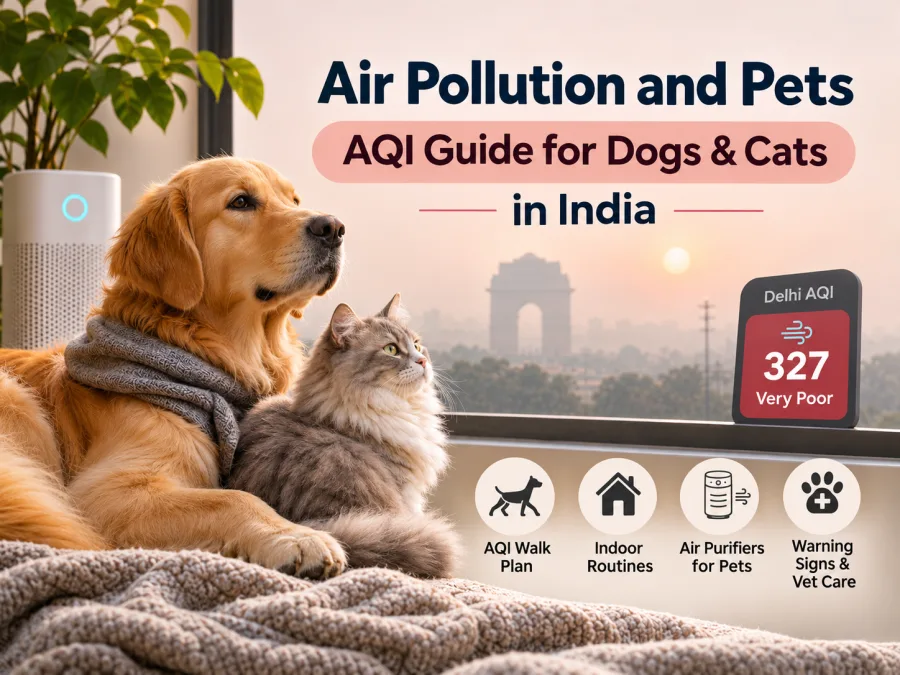
Air pollution and pets are a growing concern for families across India, especially during winter and the Diwali season. Dogs and cats breathe the same polluted air we do, and smoke, fine particles and harmful gases can irritate their eyes and respiratory systems.
If you live in Delhi NCR, Lucknow, Kanpur, Patna, Chandigarh, or Mumbai, checking the Air Quality Index (AQI) should become part of your pet's daily routine during pollution episodes.
But is it safe to walk your dog in high AQI? And how can you protect a cat that stays indoors?
This guide explains what India's AQI numbers mean, how to adjust outdoor activity, which pets need extra protection, and when breathing problems require veterinary attention.
How Does Air Pollution Affect Dogs and Cats?
Air pollution contains a mixture of particles and gases. Some come from vehicle exhaust, construction dust, industrial emissions, burning waste, and seasonal smoke.
Two important pollutants are PM2.5 and PM10.
-
PM2.5: Tiny airborne particles that can travel deep into the respiratory system.
-
PM10: Larger inhalable particles, including some forms of dust, that can irritate airways.
-
Other pollutants: Nitrogen dioxide, sulphur dioxide, ozone and carbon monoxide may also contribute to poor air quality.
Exposure can irritate a pet's nose, throat and eyes. Some animals may cough, wheeze or become unusually tired after outdoor activity.
Dogs may inhale more polluted air when running, playing or panting heavily. Cats can also be affected, even when they spend most of their time indoors, because outdoor particles can enter through windows, doors and ventilation.
Not every cough is caused by pollution. Infections, heart disease, allergies, and other medical conditions can cause similar symptoms. Persistent or unusual breathing problems need a veterinary assessment.
India's AQI Chart: When Is It Safe to Walk Your Dog?
India's Central Pollution Control Board (CPCB) classifies outdoor air quality into six categories.
The table below combines these official bands with a precautionary pet activity plan. It is not an official CPCB recommendation for animals. Your veterinarian may advise stricter limits for a particular pet.
| CPCB AQI | Air quality | Suggested dog-walking plan |
| 0–50 | Good | Normal walks and outdoor play for healthy pets |
| 51–100 | Satisfactory | Usually suitable for routine walks; monitor sensitive pets |
| 101–200 | Moderate | Consider shorter, gentler walks, especially for vulnerable pets |
| 201–300 | Poor | Limit outdoor time; prioritise brief toilet breaks and indoor play |
| 301–400 | Very Poor | Avoid exercise outdoors; essential toilet breaks only |
| 401–500 | Severe | Keep pets indoors as much as possible; make unavoidable outings very brief |
A healthy adult dog and an elderly Pug may respond differently to the same conditions. Some sensitive pets need reduced outdoor exposure even when AQI is below 200.
Check your nearest monitoring station rather than relying only on a city-wide average.
Where to check: CPCB National AQI Dashboard.
AQI 0–100: Maintain Your Normal Routine
When outdoor air quality is good or satisfactory, most healthy pets can continue their usual routine.
Still, watch for nearby pollution sources such as burning waste, construction dust or heavy traffic.
Keep your dog's walking route away from busy junctions where practical.
AQI 101–200: Reduce Strenuous Outdoor Exercise
During moderate pollution, consider replacing long runs with shorter walks.
This is particularly important for puppies, older animals and pets with known heart or respiratory problems.
Choose quiet routes and avoid unnecessary exertion.
AQI 201–300: Switch to Short Walks
At poor AQI levels, a long outdoor exercise session is usually not worth the extra exposure.
Take your dog outside for essential needs, then return indoors.
Use puzzle feeders, gentle training and indoor scent games to maintain your pet's routine.
AQI 301–400: Essential Outdoor Breaks Only
At very poor AQI levels, skip outdoor running, park visits and extended play.
Keep toilet breaks brief. Consider an indoor toilet arrangement for dogs that can use one safely.
Cats should remain indoors, with clean litter trays and suitable enrichment.
AQI 401–500: Minimise Exposure
Severe AQI conditions can be harmful even during relatively light activity.
Keep pets in a cleaner indoor environment, avoid balcony play and postpone nonessential outdoor activities.
If your dog cannot manage an indoor toilet option, arrange the shortest practical outdoor break.
Never ignore urgent medical symptoms simply because you are trying to avoid pollution. A pet struggling to breathe needs emergency veterinary care.
Why Winter Smog Is a Problem for Pets in India
Air pollution is not limited to Delhi.
Winter pollution episodes can affect Delhi NCR, Ghaziabad, Noida, Gurugram, Faridabad, Lucknow, Kanpur, Patna, and Chandigarh. Mumbai and other cities can also experience poor air-quality days.
The contributing pollution sources vary between locations and seasons.
Seasonal Smoke and Stubble Burning
Agricultural residue burning can contribute to regional pollution episodes, alongside traffic, industry, construction dust, and other sources.
Winter weather conditions can also trap pollutants closer to the ground.
Winter Inversion and Fog
During a temperature inversion, a warmer layer of air above cooler surface air can limit vertical mixing. This allows pollutants to accumulate near the ground.
Fog and smog are not the same thing, and visibility alone cannot tell you whether the air is safe.
A clear-looking morning may still have elevated PM2.5 levels.
Diwali Smoke and Pets
Diwali falls on November 8, 2026.
Firecracker smoke can add to existing pollution, while sudden noise can increase anxiety in some pets.
During Diwali:
-
Keep pets indoors when smoke or fireworks are present.
-
Close windows when outdoor air becomes smoky.
-
Prepare a comfortable resting space away from loud noise.
-
Keep fresh drinking water available.
-
Avoid terrace and balcony exposure during smoke episodes.
-
Check the AQI before resuming regular walks.
Smoke and loud sounds are separate concerns. A dog that hides during fireworks may be frightened, while one that coughs or breathes rapidly may also be experiencing physical irritation.
What Do GRAP Stages Mean for Delhi NCR Pet Parents?
The Graded Response Action Plan (GRAP) is Delhi NCR's official pollution-response framework.
Its stages are linked to air quality and forecasts. The authorities can activate measures in advance, so always check the latest official announcement.
| GRAP stage | AQI category | What pet parents should consider |
|---|---|---|
| Stage I | Poor, 201–300 | Reduce outdoor exercise and monitor air quality |
| Stage II | Very Poor, 301–400 | Plan brief toilet breaks and indoor activities |
| Stage III | Severe, 401–450 | Avoid nonessential outdoor activity |
| Stage IV | Severe+, above 450 | Minimise exposure and prepare for prolonged indoor routines |
GRAP controls apply to pollution sources and public activities, not directly to pet walking schedules. The right-hand column is a suggested precaution for pet owners.
Check the Commission for Air Quality Management for active restrictions.
Which Dogs and Cats Are Most at Risk?
Some pets may struggle more during pollution episodes because of their anatomy, age or existing health conditions.
Flat-Faced Dog Breeds
Short-muzzled or brachycephalic dogs may already have restricted airflow.
Examples include Pugs, Shih Tzus and Bulldogs.
These flat-faced breeds need extra care during smoke, pollution and hot weather.
Avoid strenuous exercise, use a comfortable harness, and seek veterinary advice if breathing becomes noisier or more difficult than usual.
Flat-Faced Cats
Persian and Himalayan cats can have shortened facial structures that may contribute to breathing difficulties.
Read more about Himalayan cats and their everyday care requirements.
Cats with asthma or other respiratory conditions may also be especially sensitive to airborne irritants.
Puppies, Kittens and Senior Pets
Young and elderly animals can be more vulnerable during periods of poor air quality.
Pets with heart disease, asthma, chronic bronchitis, or other respiratory conditions may require an individual exposure-management plan from their veterinarian.
Dog Coughing During Pollution: When Should You Worry?
Polluted air can irritate the respiratory tract, but coughing is not enough to diagnose the cause.
Watch for:
-
Repeated coughing, gagging, or wheezing
-
Unusually rapid breathing at rest
-
More effort when breathing
-
Watery eyes or nasal discharge
-
Unusual tiredness or reluctance to move
-
Reduced appetite or activity
Some pets show subtle changes before obvious distress. Learn more about reading the small signs.
When to See a Vet
Contact your veterinarian promptly if your pet develops persistent coughing, wheezing, unusual breathing sounds, or a noticeable change in resting breathing.
Seek emergency veterinary care immediately if your dog or cat:
-
Struggles to breathe or appears to gasp
-
Develops blue, grey or unusually pale gums
-
Collapses or becomes severely weak
-
Has marked breathing effort while resting
-
Shows open-mouth breathing, particularly in a cat
Do not administer cough medicines, nebulisers, inhalers or oxygen treatments without veterinary direction.
Before the appointment, record when symptoms began, recent outdoor exposure and any known medical conditions. Our guide on what to tell your vet can help you prepare.
How to Keep Indoor Air Cleaner for Pets
Indoor air is not automatically clean, especially when outdoor smoke enters through doors and windows.
During pollution episodes, create one room where your pet can rest comfortably.
Close Windows During Smoke Episodes
Keep doors and windows closed when outdoor pollution is high, provided you can maintain a safe indoor temperature and adequate ventilation for people and pets.
Avoid smoking indoors, burning incense, lighting scented candles, or using aerosol sprays around your pet.
Cooking smoke and frying can also raise indoor particle levels.
Do Air Purifiers Help Pets in Delhi?
A suitably sized air purifier with effective particle filtration can reduce fine particles in a room.
When choosing an air purifier for pets, compare:
-
HEPA or another independently verified high-efficiency particle filter
-
Clean Air Delivery Rate (CADR) suitable for the room
-
Replacement-filter price and availability
-
Noise levels and electricity usage
-
Safety around curious pets
Avoid ozone-producing air cleaners. Ionisation or ozone-generation features are not a substitute for effective mechanical filtration.
Indicative air-purifier budgets in India:
| Price range | Typical category |
|---|---|
| ₹5,000–₹10,000 | Entry-level units for some small spaces |
| ₹10,000–₹20,000 | Mid-range room purifiers |
| ₹20,000–₹35,000+ | Larger-capacity or premium models |
These are broad November 2026 market ranges, not product recommendations. Performance should be judged by filtration and CADR, not price alone.
An air purifier reduces exposure; it does not treat respiratory disease or guarantee pollution-free indoor air.
Don't Forget Filters and Cleaning
Clean floors with a damp mop when practical. Avoid raising dust through aggressive dry sweeping.
Replace purifier filters according to the manufacturer's instructions.
Keep litter areas clean, choose low-dust litter where suitable, and avoid strong fragrances around cats.
Indoor Games for Dogs and Cats During High AQI
Staying indoors for several days can change a pet's routine.
However, you can still provide physical activity and mental stimulation in an Indian apartment or flat.
Five Indoor Games for Dogs
-
Find the treat: Hide small portions of your dog's regular food around a safe room.
-
Snuffle mat: Encourage slow, scent-based searching.
-
Short training sessions: Practise sit, stay, recall, and simple tricks.
-
Puzzle feeder: Let your dog work gradually for a reward.
-
Gentle indoor fetch: Use a soft toy in a clear, non-slip space.
Avoid vigorous indoor exercise if your dog is coughing, breathing unusually fast or feeling unwell.
Learn how to manage boredom behaviour on indoor days.
Five Indoor Activities for Cats
-
Use a wand toy for gentle, supervised play.
-
Offer a puzzle feeder.
-
Create cardboard hiding places.
-
Set up a stable cat tree or scratching post.
-
Rotate toys to maintain interest.
Allow your cat to choose when to participate. Do not force activity on an animal that appears unwell.
Balcony, Terrace and Lift Routines During Smog
A common mistake is assuming that a high-rise balcony or building terrace has clean air.
Outdoor pollution can still reach higher floors. During severe smog, a terrace should not replace a normal outdoor walk.
If you live in a flat:
-
Keep balcony access restricted during poor-air-quality episodes.
-
Use a safe indoor toilet solution if your dog is trained for one.
-
Avoid long waits near basement parking exhaust or busy entrances.
-
Keep essential outdoor trips short.
-
Check nearby air-quality readings before going out.
For a dog that uses the lift, prepare the leash and supplies before leaving the flat so you spend less time outdoors or near traffic.
What Is the Best Time to Walk a Dog in Winter?
There is no universally cleanest hour.
Winter mornings can have high pollution because of stagnant conditions, while evenings may also see traffic emissions and smoke.
Check the latest hourly AQI trend for your nearest monitoring station. Choose the lower-pollution period when possible and avoid strenuous activity.
Do not assume that early morning is always safer.
How Can We Help Street and Community Dogs During Pollution?
Community dogs face greater exposure because they spend much of their lives outdoors.
Residents, feeders and Resident Welfare Associations (RWAs) can reduce some of this risk without bringing every animal indoors.
Practical steps include:
-
Provide clean drinking water in safe, accessible locations.
-
Place water and feeding points away from vehicle exhaust and construction dust where possible.
-
Provide a safe, well-ventilated resting area protected from direct smoke and harsh weather.
-
Avoid burning rubbish, leaves or waste near feeding and resting areas.
-
Observe community dogs for persistent coughing, weakness or breathing difficulty.
-
Contact a local veterinarian or animal welfare organisation if an animal appears unwell.
Do not place animals in enclosed, poorly ventilated structures or force unfamiliar dogs into confined spaces.
Work with RWA representatives and local animal welfare volunteers to keep assistance safe and consistent.
Build a Smog Season Pet Plan Before Diwali
You do not need to wait until your dog starts coughing to prepare.
A simple plan can help your family respond calmly when AQI levels rise.
Your daily checklist:
-
Check the nearest CPCB AQI reading.
-
Choose outdoor activity based on your pet's health and the conditions.
-
Make fresh drinking water available.
-
Prepare indoor enrichment activities.
-
Keep a clean resting space ready.
-
Check air purifier filters, if you use one.
-
Watch for unusual coughing or breathing.
-
Keep your veterinarian's contact information accessible.
Also note your pet's usual resting breathing pattern and any symptoms that develop during pollution episodes.
If your pet has a known respiratory or heart condition, ask your veterinarian for a personalised winter care plan.
Final Thoughts
Air pollution and pets deserve the same practical attention as heat, thunderstorms and other seasonal hazards.
For dogs and cats in India, a safer winter routine starts with monitoring local air quality, limiting exposure during severe pollution, keeping indoor air cleaner and recognising changes in breathing.
You cannot control every pollution source outside your home. But you can make more informed decisions about your pet's walks, playtime and resting environment.
Check the AQI, adjust the routine, and contact your veterinarian whenever breathing changes concern you.