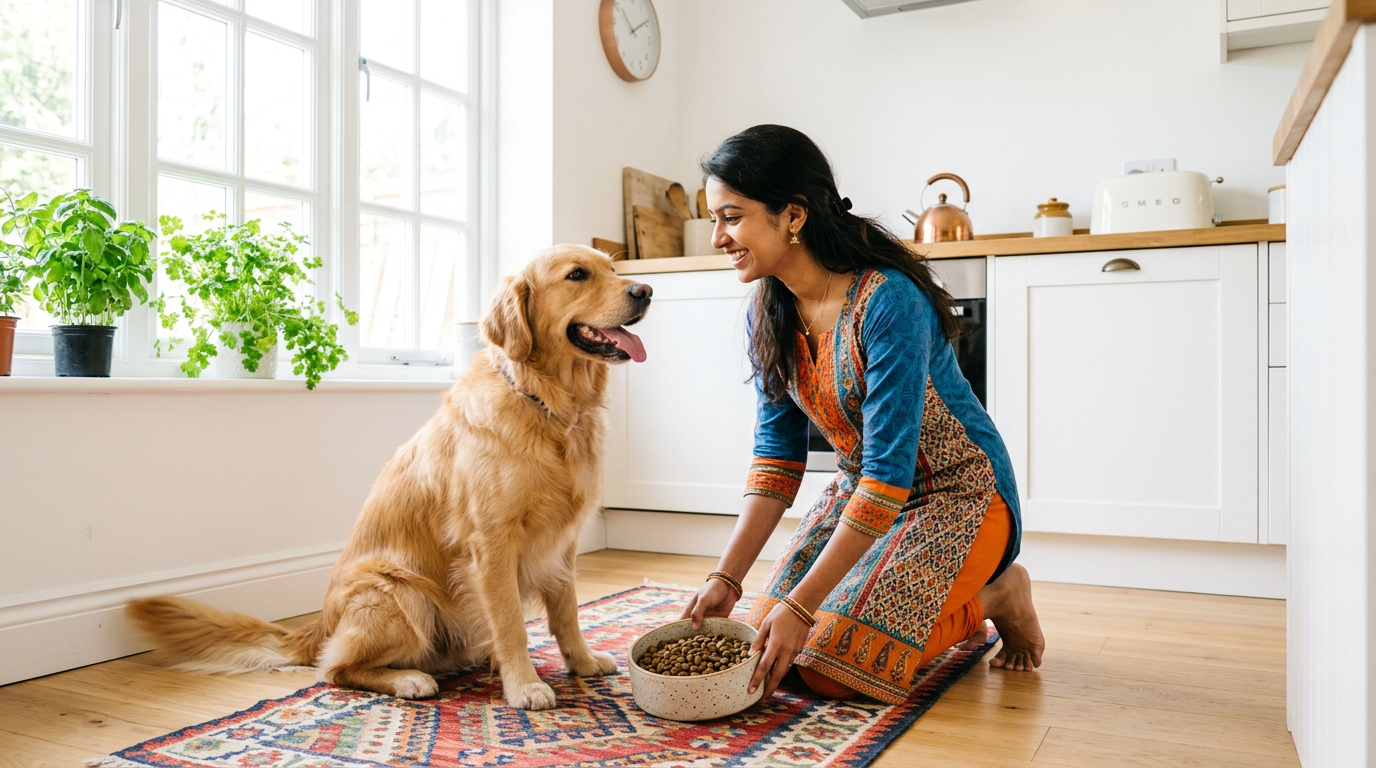
Free-feeding (food always available) and scheduled meals each have a place. Knowing which fits your pet matters more than picking a side.
Puppies and kittens: 3–4 meals a day
Small bodies need frequent fuel and can't regulate blood sugar as well as adults. Drop to two meals a day around six months for most dogs, and stay at two meals indefinitely for cats.
Large and deep-chested dogs
Breeds like Great Danes, Standard Poodles, and German Shepherds are at risk for bloat. Smaller, more frequent meals — and no vigorous exercise immediately before or after eating — reduce that risk.
Signs your schedule needs adjusting
Bile vomiting first thing in the morning often means the overnight gap between meals is too long — an earlier or later last meal usually fixes it. Begging, counter-surfing, or bolting food can be a sign of too few meals for the calories involved; splitting the same daily total into more, smaller meals often calms the behaviour without changing weight.
Free-feeding cats: when it works and when it doesn't
Free-feeding works for a lean, single cat with reliable self-control. It rarely works in multi-cat homes, where one cat can dominate the bowl, or with any cat prone to overeating — scheduled, portioned meals are the safer default in both cases.
Adjusting for senior pets
Older pets often do better on smaller, more frequent meals as digestion slows and appetite becomes less predictable. Consistency matters more than the exact timing — pets thrive on predictable routines.