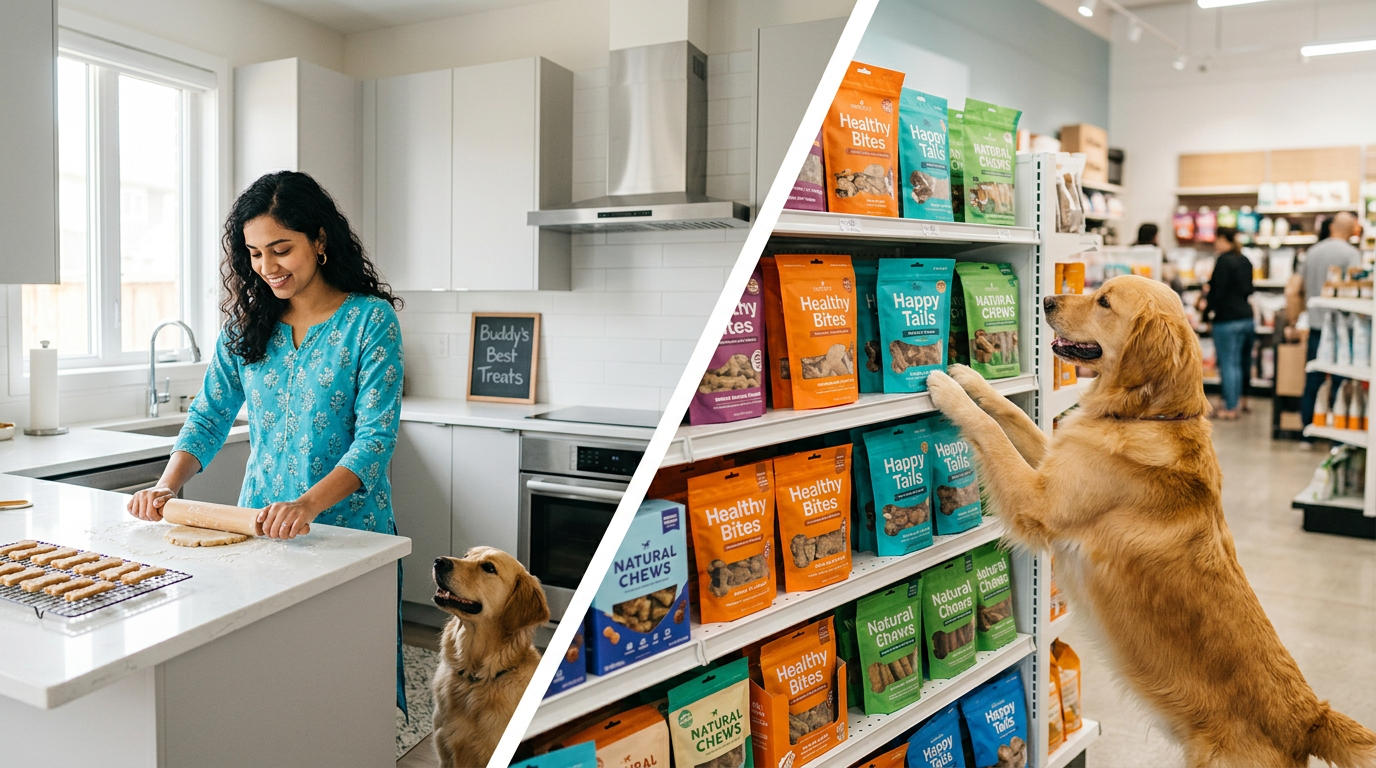
A ₹7,000 bag of food and a ₹2,500 bag of food can have nearly identical ingredient lists. The price difference is often packaging, imported branding, and marketing — not nutrition.
What actually matters
- Named animal proteins in the top ingredients
- A complete-and-balanced statement for your pet's life stage
- A guaranteed analysis with reasonable protein and fat percentages for your dog's size and activity level
- A manufacturing date and batch number you can verify, ideally within the last few months
What doesn't matter as much as you think
Grain-free, ancient grains, exotic proteins, and "human-grade" claims are mostly marketing. In fact, grain-free formulas have come under scrutiny for a possible link to a heart condition (DCM) in some dogs when legumes replace grains at high levels — grain-free isn't automatically the safer or "cleaner" choice it's marketed as.
How to actually compare two bags
Convert both to a dry-matter basis (accounting for moisture) before comparing protein and fat, check that both list a named protein source in the same top position, and price them per kilogram of actual feeding — not per bag, since bag sizes and feeding amounts vary.
When paying more is genuinely worth it
Prescription or therapeutic diets for kidney disease, allergies, or weight management are formulated and tested to a different standard, and the extra cost there reflects real clinical value — not marketing.
The best food is the one your pet thrives on and you can afford to feed consistently. Switching foods constantly chasing "premium" upgrades does more harm than good, since sudden diet changes are one of the most common causes of loose stools.