Treats are tools — for training, for bonding, for occasional indulgence. The source matters less than what's in them and how often they show up.
Homemade strengths
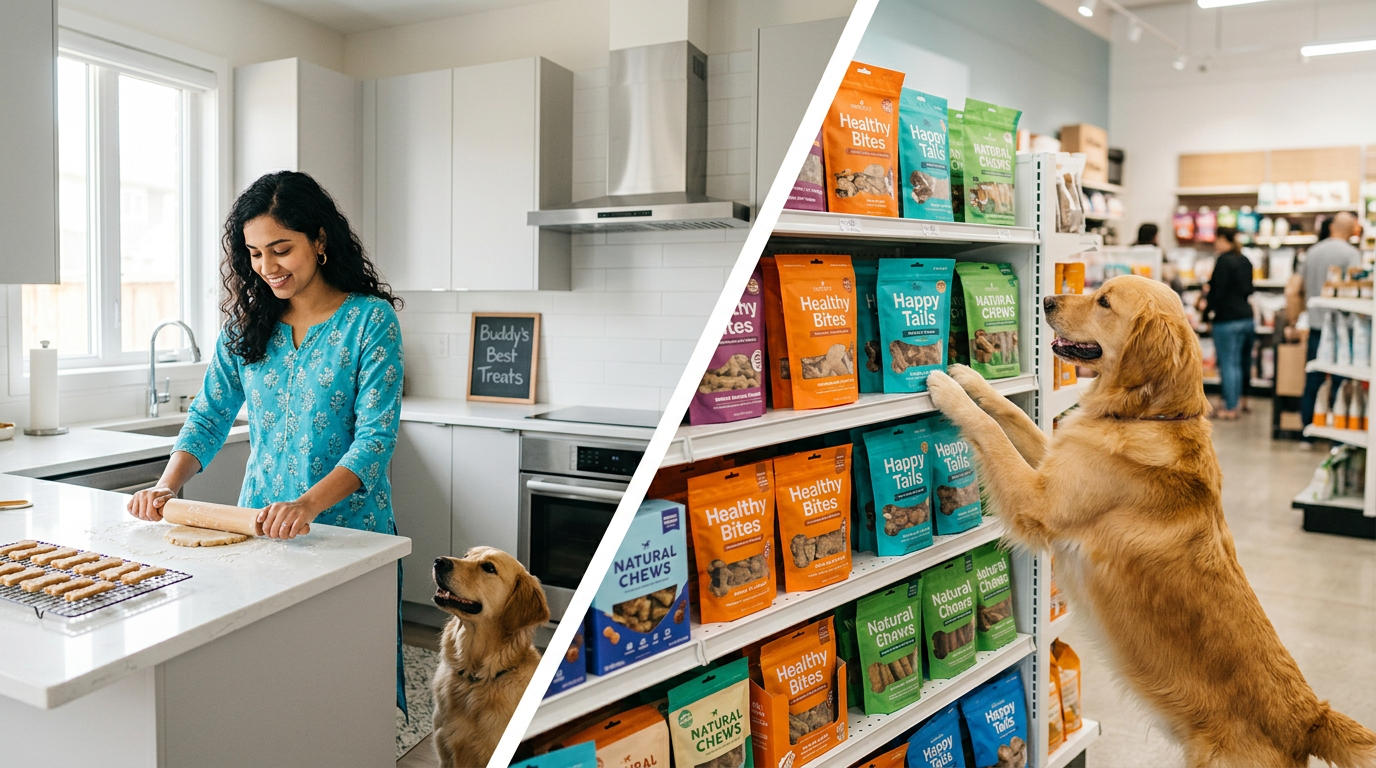
You control every ingredient, you can match your pet's specific allergies and preferences, and a single batch of baked treats costs a fraction of a similar store-bought bag.
What to keep out of homemade treats
Onion, garlic, chocolate, raisins, xylitol (found in some peanut butters), and excess salt are common kitchen ingredients that are genuinely dangerous for pets. When adapting a human recipe, double-check every ingredient against a pet-safe list before baking a batch — not after your dog has eaten half of it.
Store-bought strengths
Convenience, consistency, and shelf life. Many commercial treats are also formulated to be calorie-controlled and complete-and-balanced in ways homemade ones aren't, which matters if treats make up a significant part of the day.
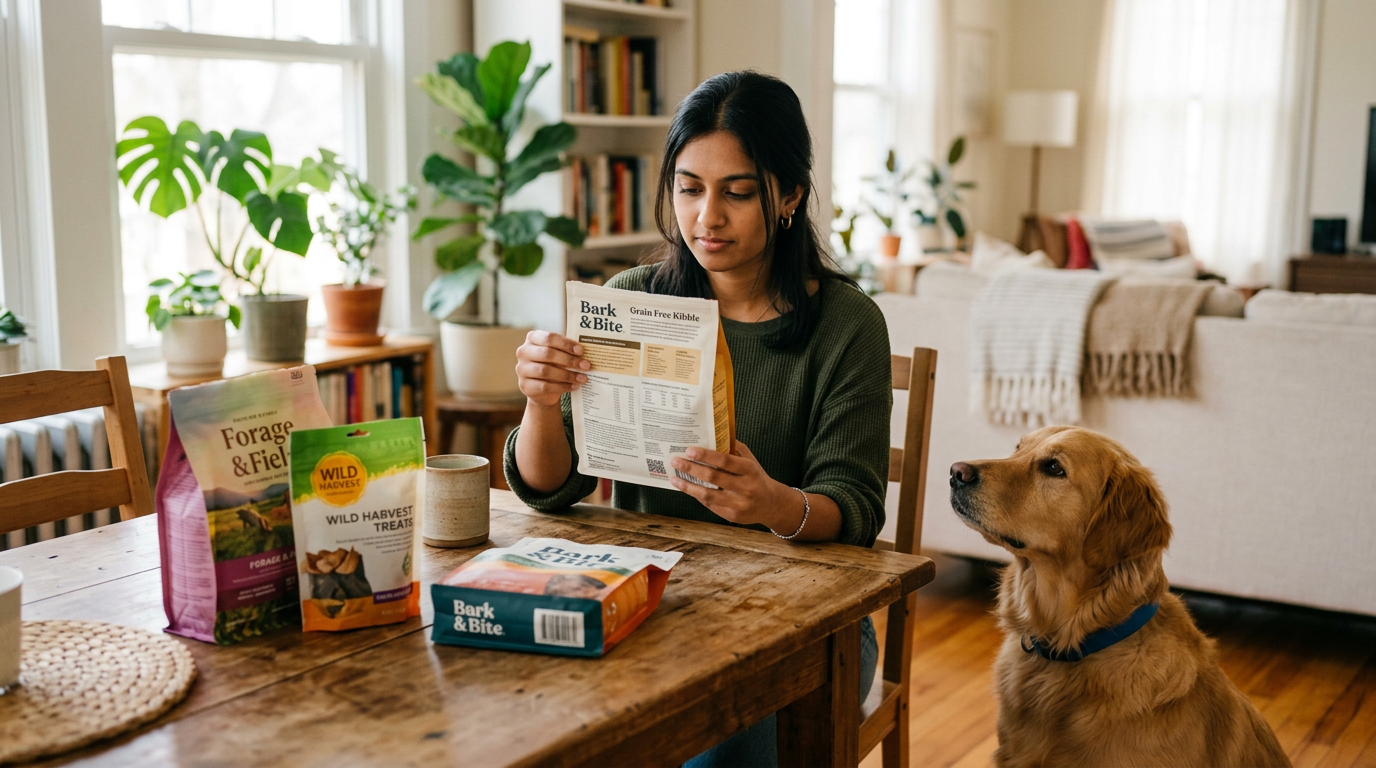
Reading a treat label the same way you'd read a food label
Check for a named protein source, avoid long lists of sugars and artificial colours, and remember that "natural" on a treat bag carries no more regulatory weight than it does on a food bag.
Portioning treats for training
Break treats into pea-sized pieces during training sessions so you can reward frequently without overshooting calories. The actual rule: treats should make up no more than 10% of daily calories. Where they come from is secondary — how much and how often is what counts.