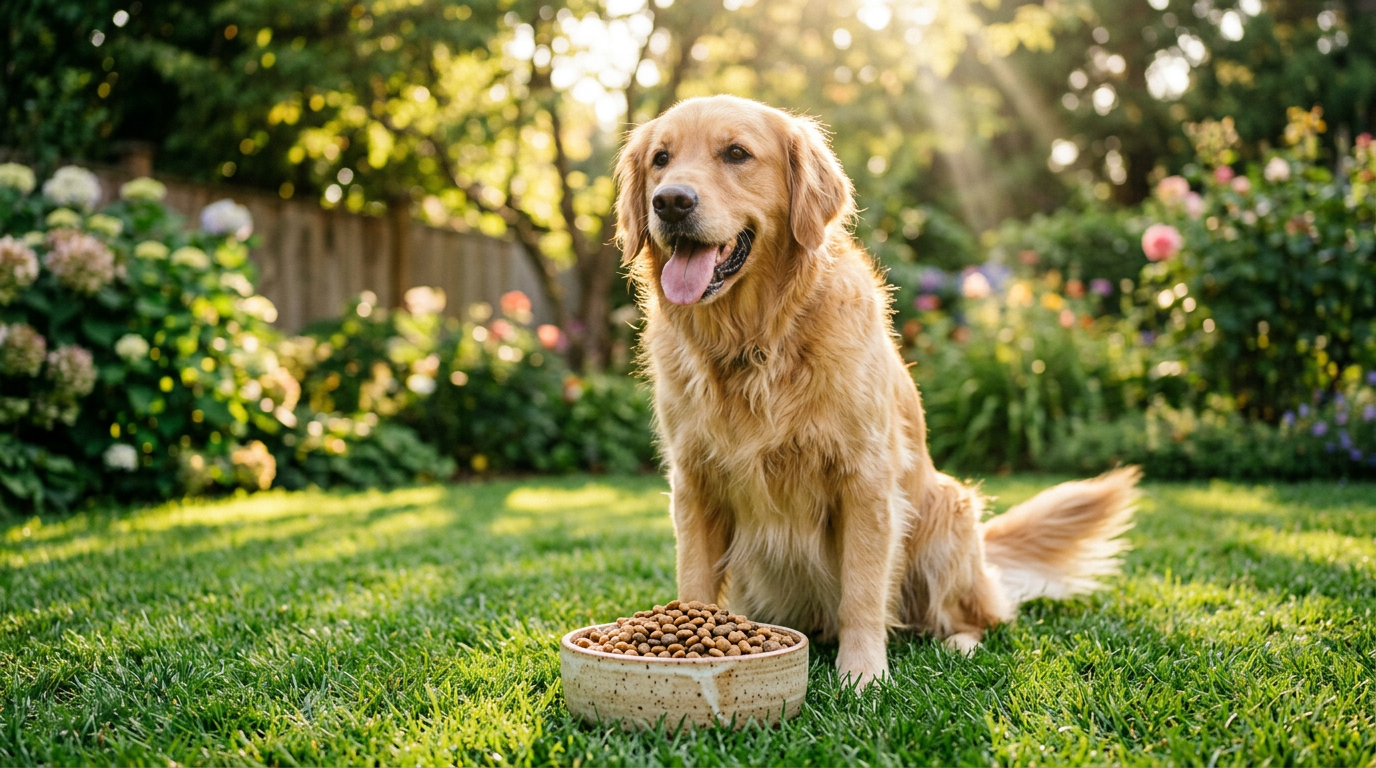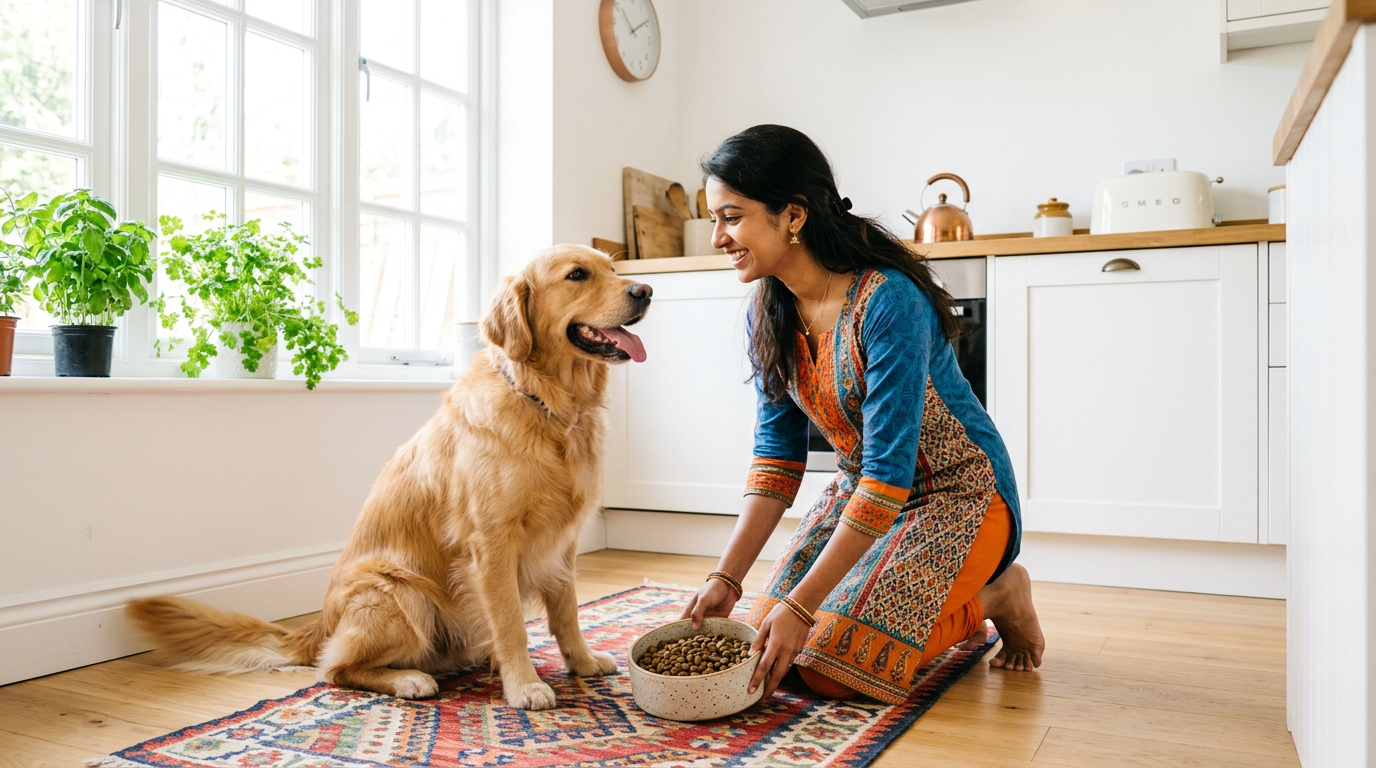
Every dog food bag prints a feeding chart, and almost every one overestimates. Most adult dogs eat 10–25% less than the chart suggests.
Start with the bag, then adjust
Feed the chart amount for two weeks. Check your dog's ribs — you should feel them under a thin layer of fat, not see them, and not have to dig for them. Adjust up or down 10% from there.
Body condition score is more reliable than a bathroom scale
Look at your dog from above: there should be a visible waist behind the ribs. From the side, the belly should tuck up, not hang level with the chest. If you can't find the waist or feel the ribs at all, it's time to cut the daily amount, not switch foods.
Activity changes everything
A working dog and a couch dog of the same weight can have feeding needs that differ by 40%. Match the bowl to the lifestyle, not the breed standard. A dog on daily long walks or agility training may need the full chart amount or more; an apartment dog with short walks often needs noticeably less.
Don't forget the treats and table scraps
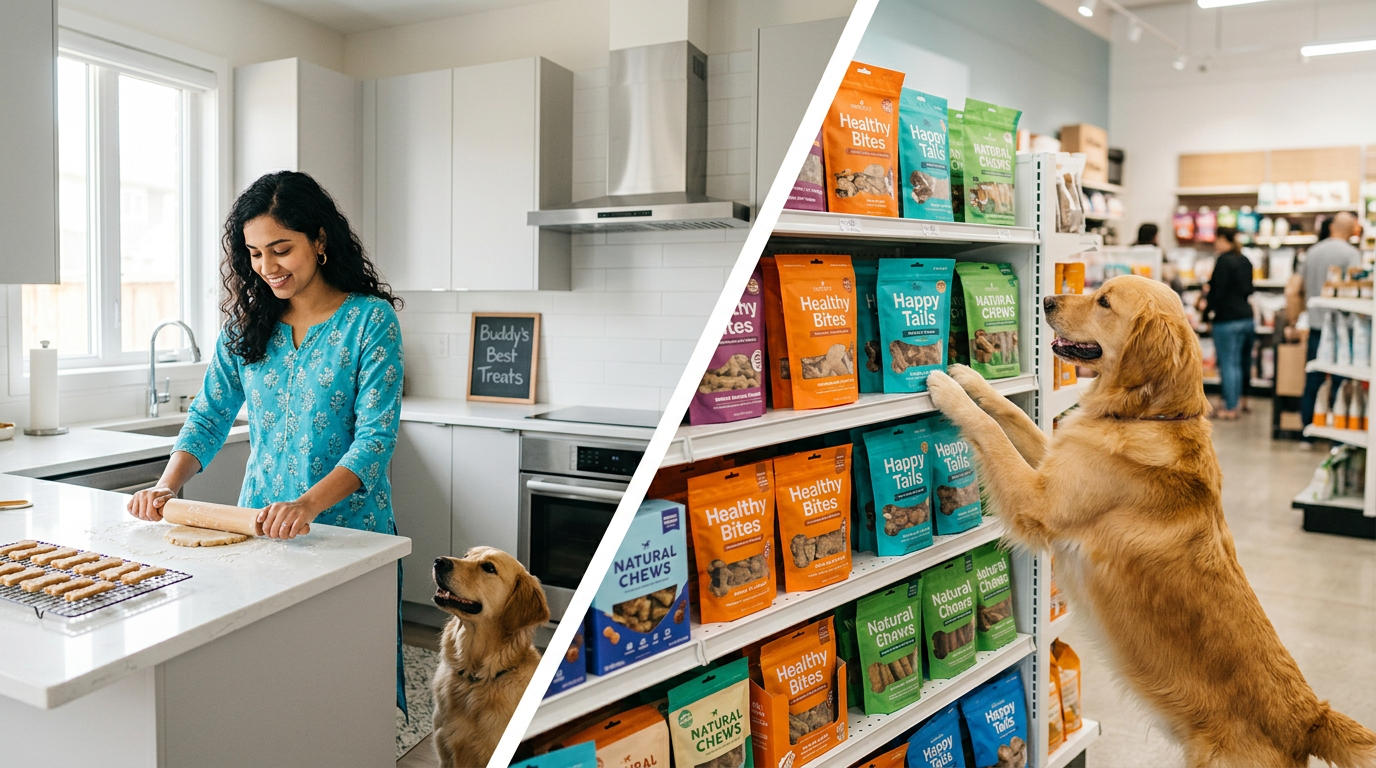
Training treats, a spoon of curd on top of dinner, or the occasional chapati piece all count toward daily calories. If your dog is gaining weight despite "correct" portions, treats are usually the hidden culprit — mentally set aside a portion of the daily food allowance for them rather than adding treats on top.
When to recalculate
Portions aren't set-and-forget. Recalculate after spaying or neutering (metabolism typically drops), after any illness or injury that reduces activity, and again as your dog moves into their senior years. Weigh your dog monthly during the adjustment phase. Once they're holding steady at a healthy weight, you've found the right portion.