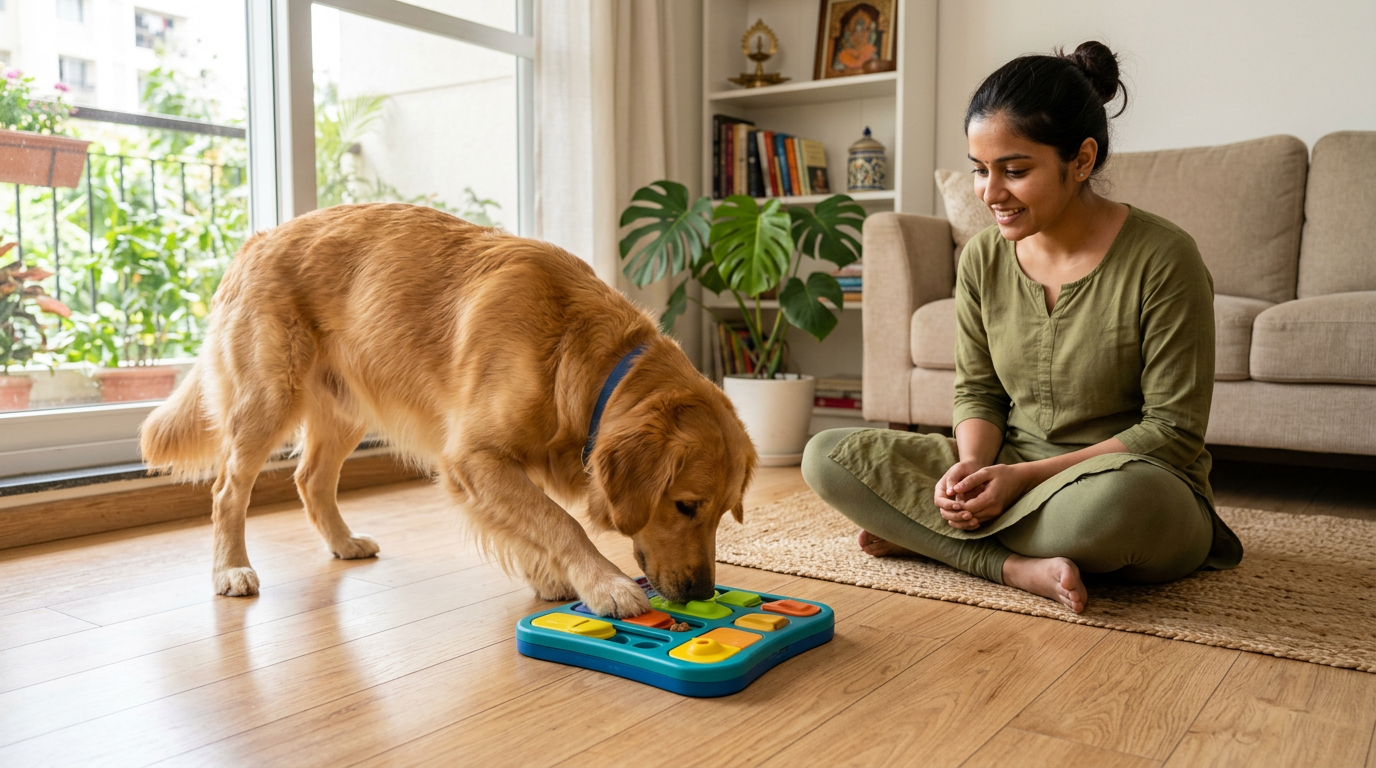
An hour of frantic ball-chasing leaves most dogs wired, not relaxed. Real fatigue comes from a mix of physical, mental, and sniffing exercise.
The three-part rule
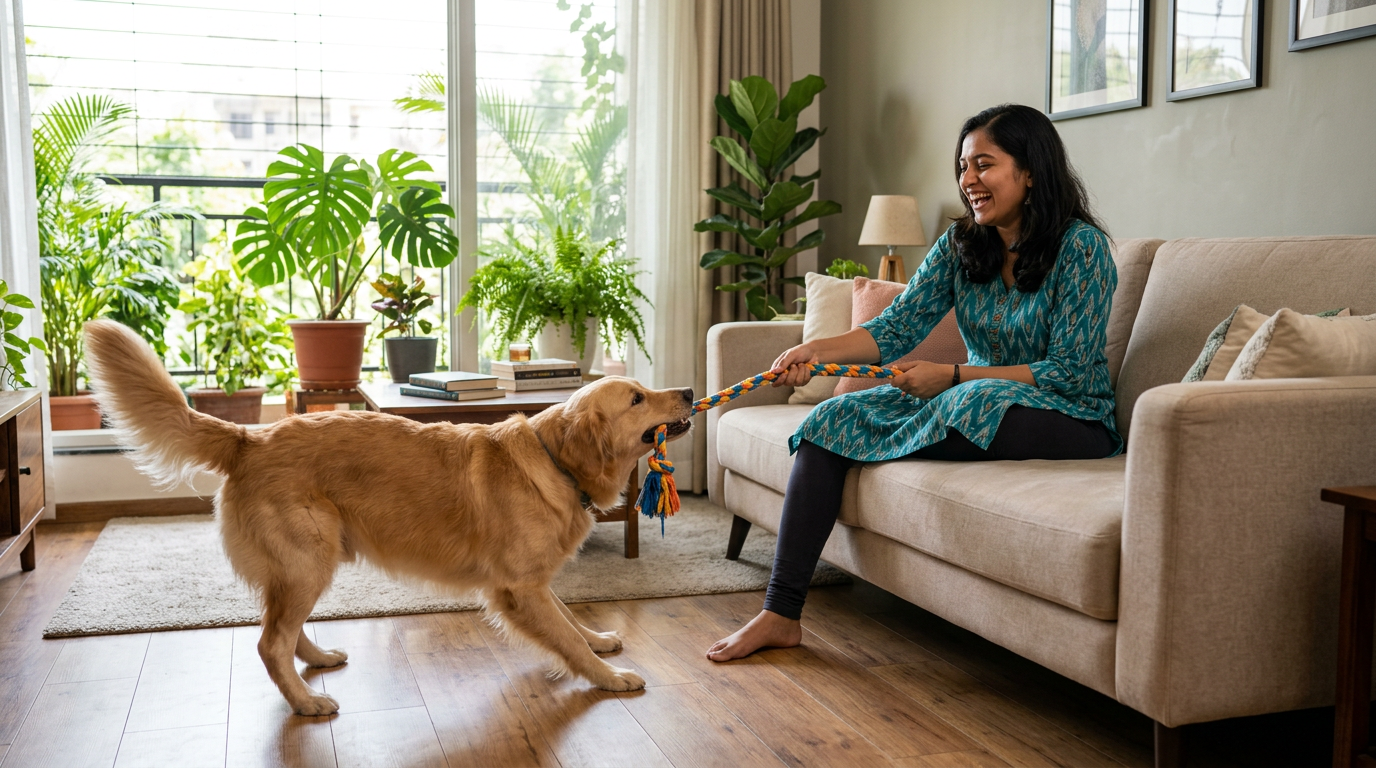
- Physical — running, fetching, swimming
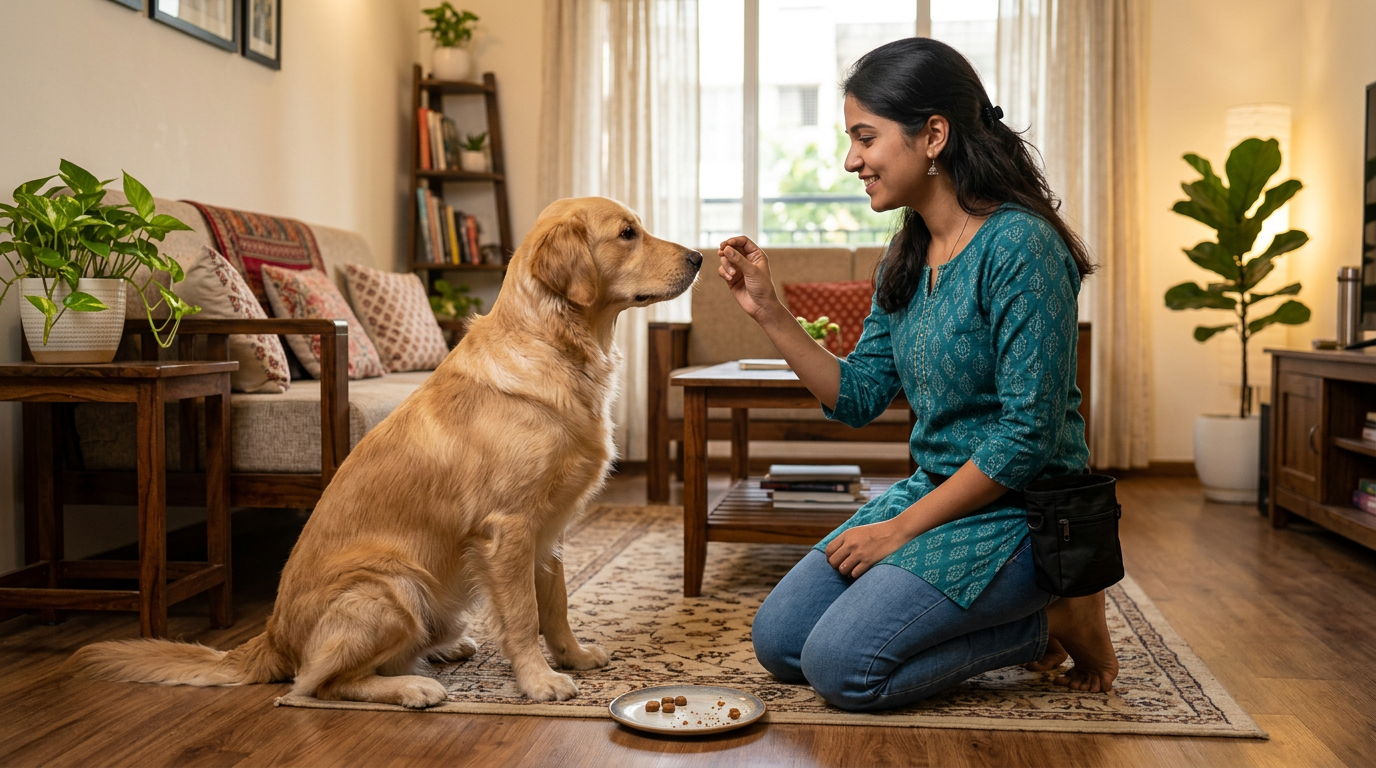
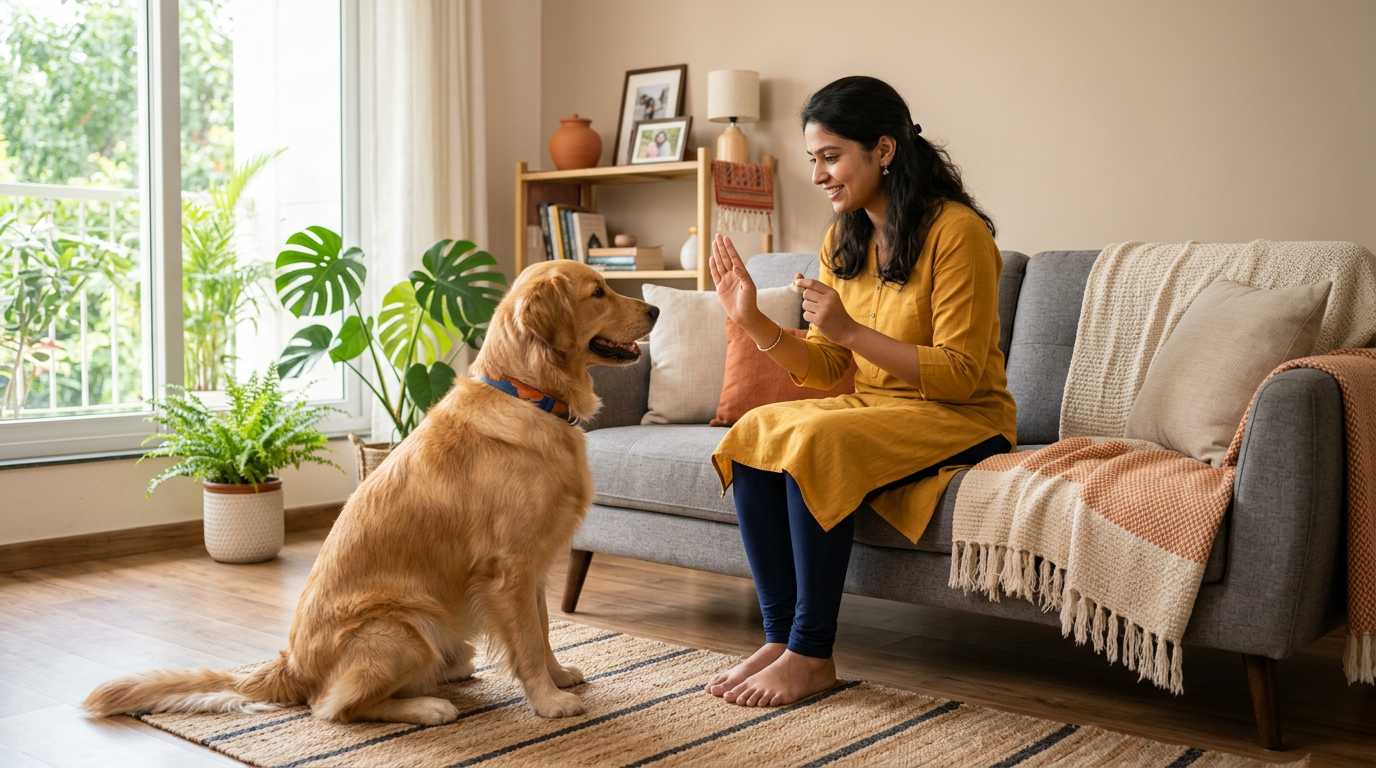
- Mental — training sessions, puzzle toys, problem-solving
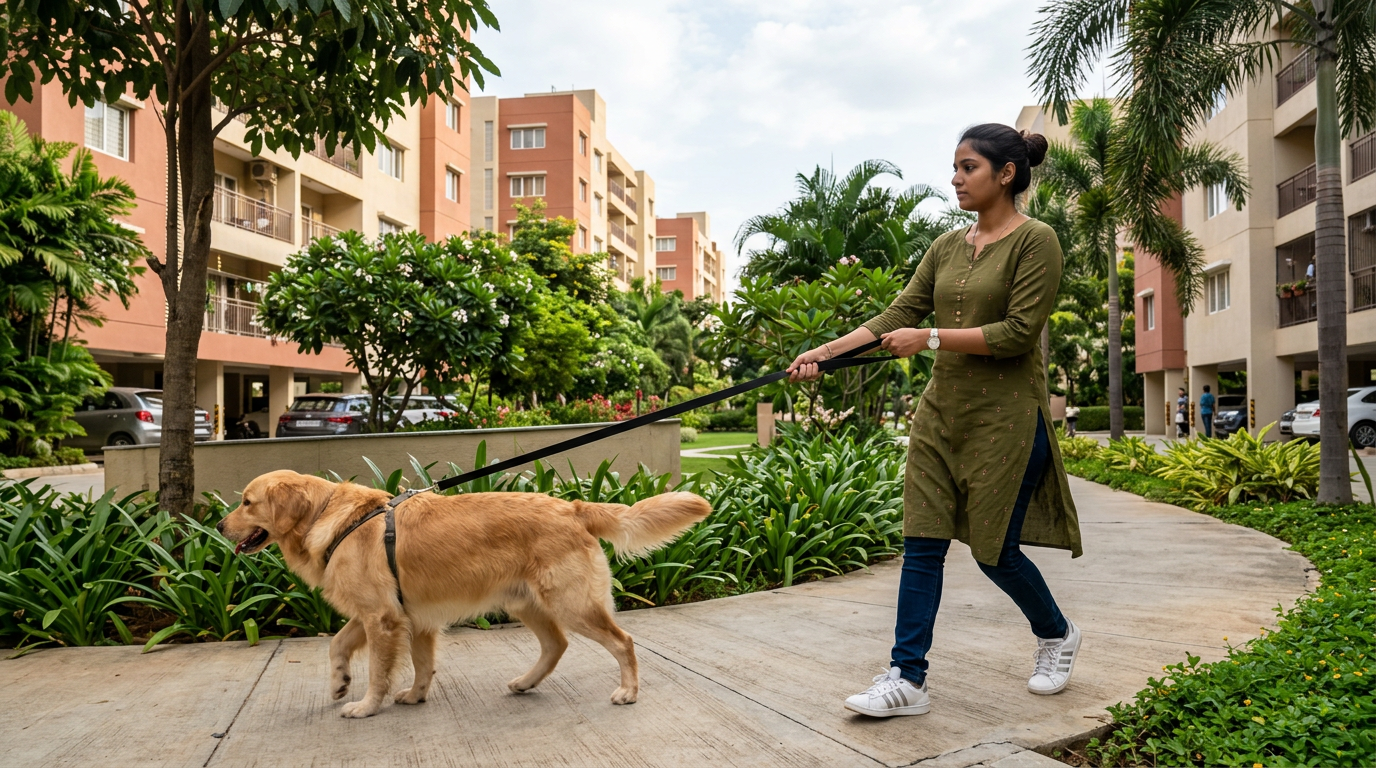
- Sensory — slow sniffing walks, novel environments
Sniffing counts more than you think
A 20-minute sniff walk often tires a dog more than a 40-minute jog. Let them lead, let them stop, let them process the world.
Signs a dog is over-stimulated rather than exercised
Zoomies after play, mouthiness that gets worse rather than better, and trouble settling even hours later are signs the activity added arousal without an outlet for it. Swap high-intensity fetch for a mix that ends with something calm — a chew, a slow sniff walk, a puzzle feeder — so the session winds the dog down instead of winding them up.
Rainy-day and small-space options
Hide treats around a room for a nose-work game, teach a new trick indoors, or use a flirt pole for controlled bursts of physical play in a small balcony or hallway. Mental and sensory exercise don't need a park.
Match the day to the dog. High-energy dogs need more of all three; low-energy dogs are fine with less.