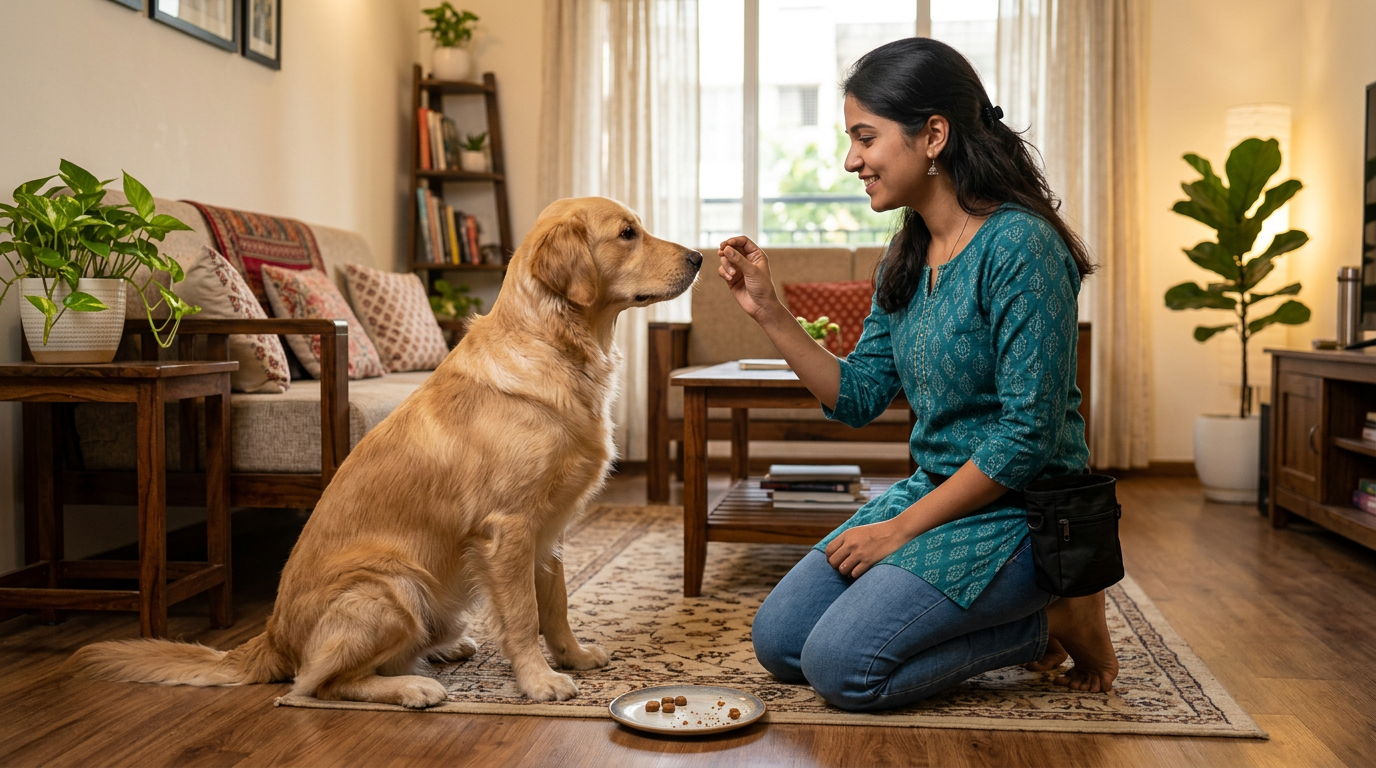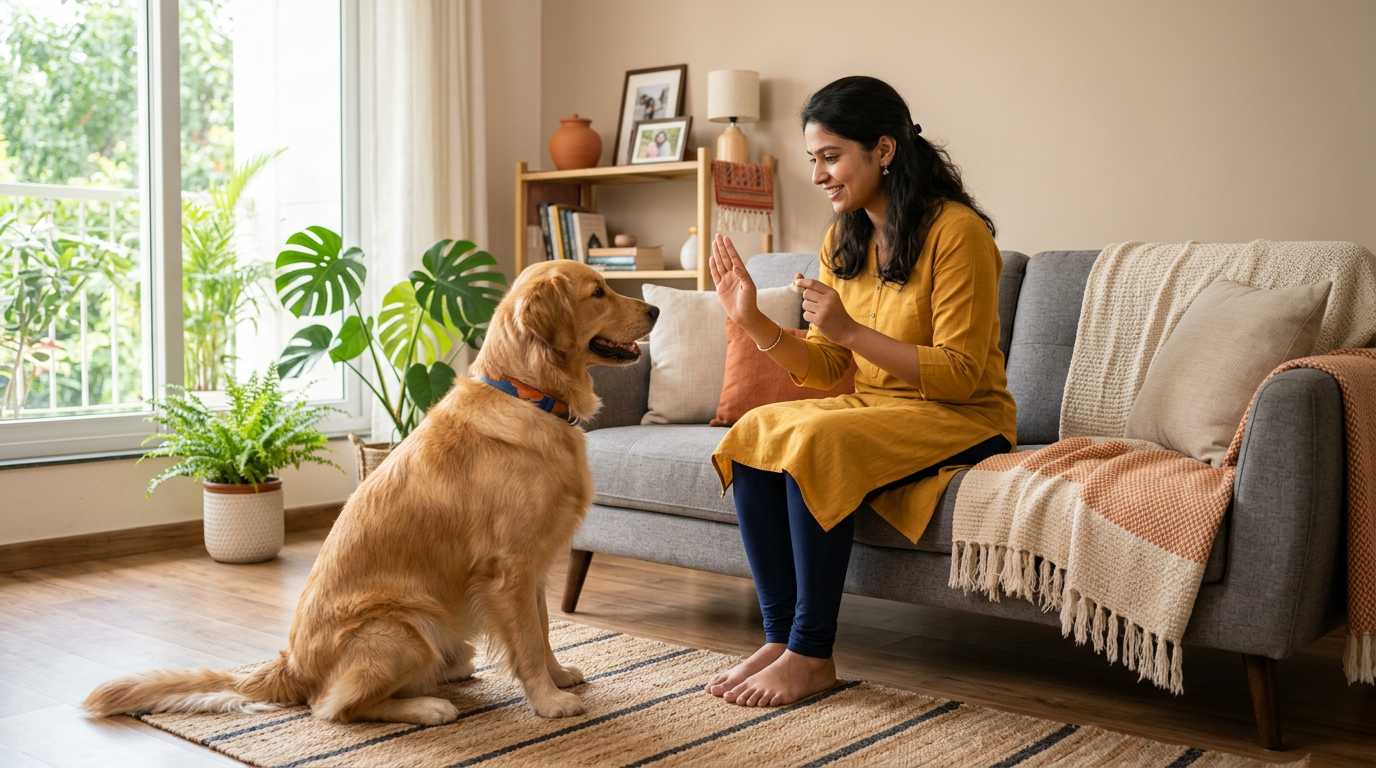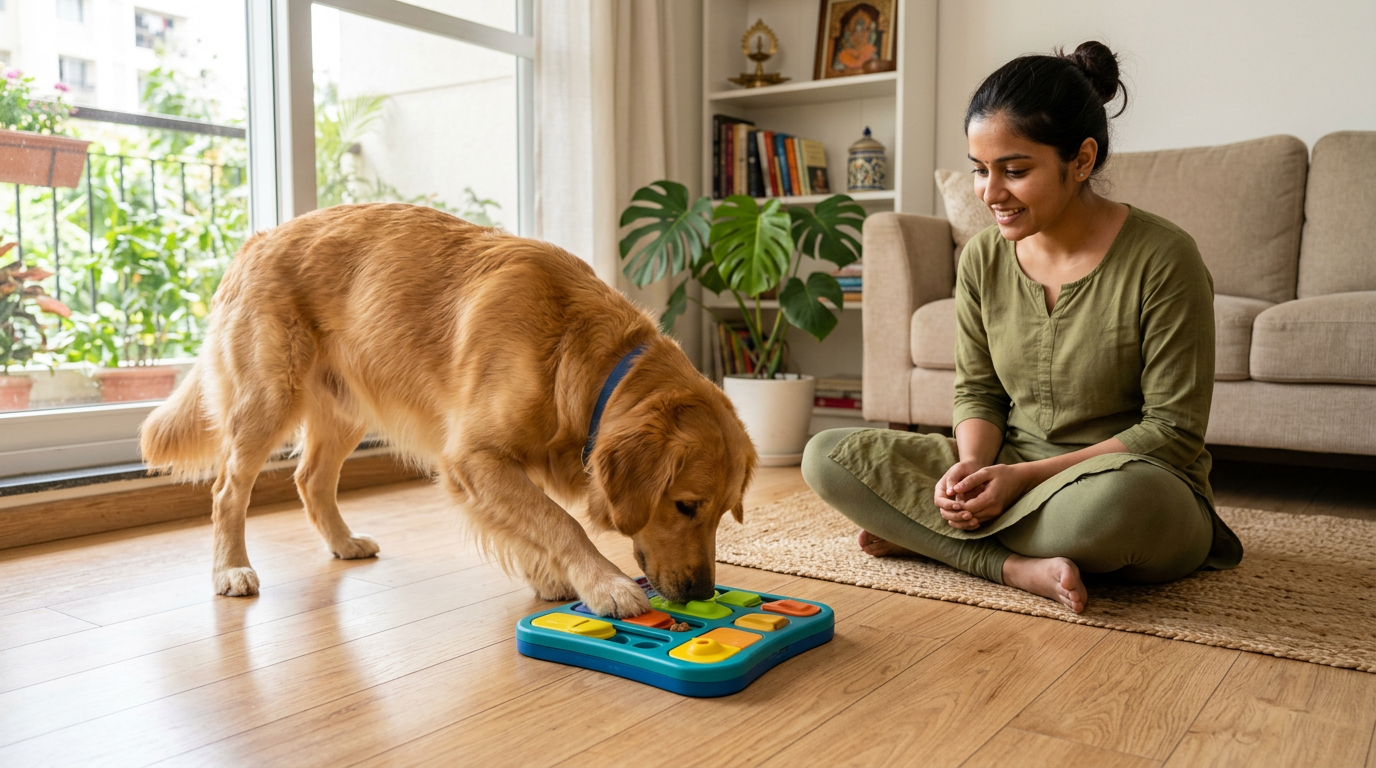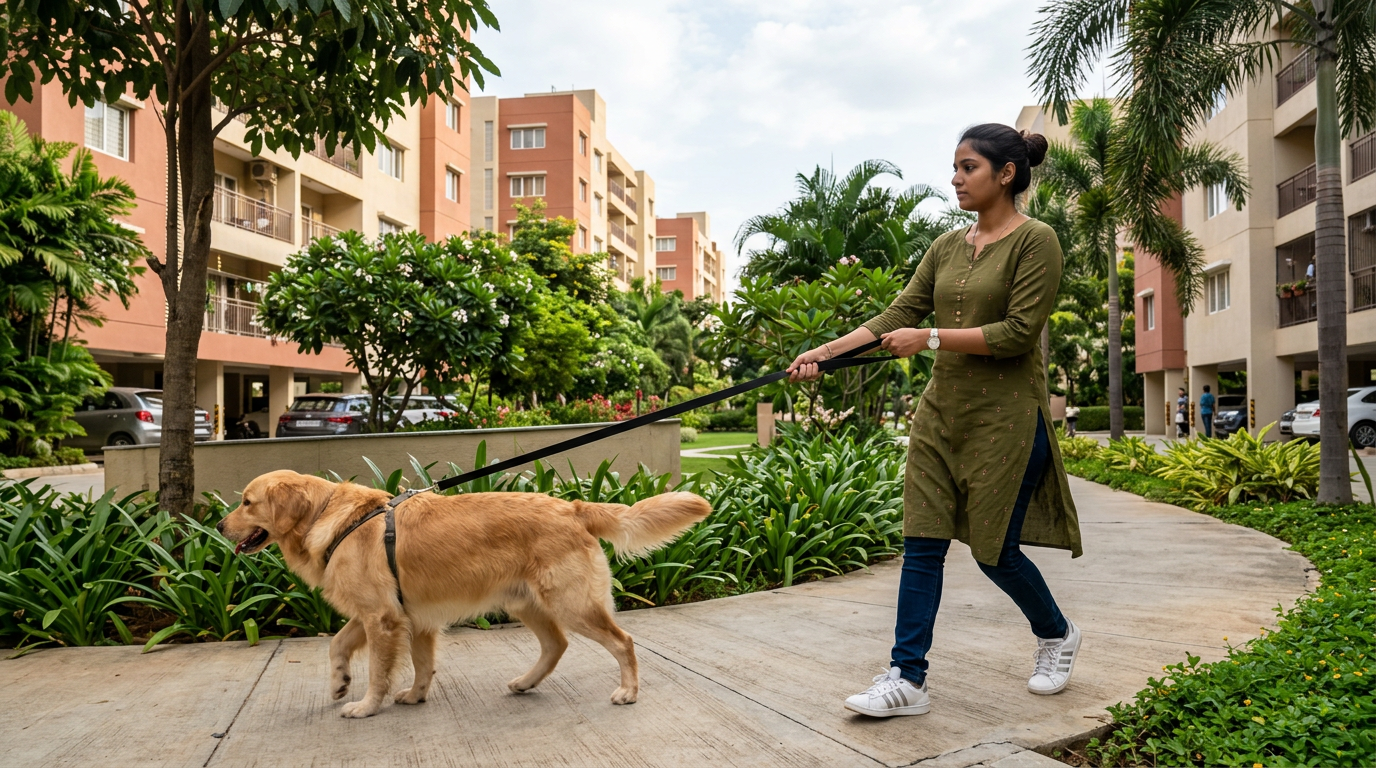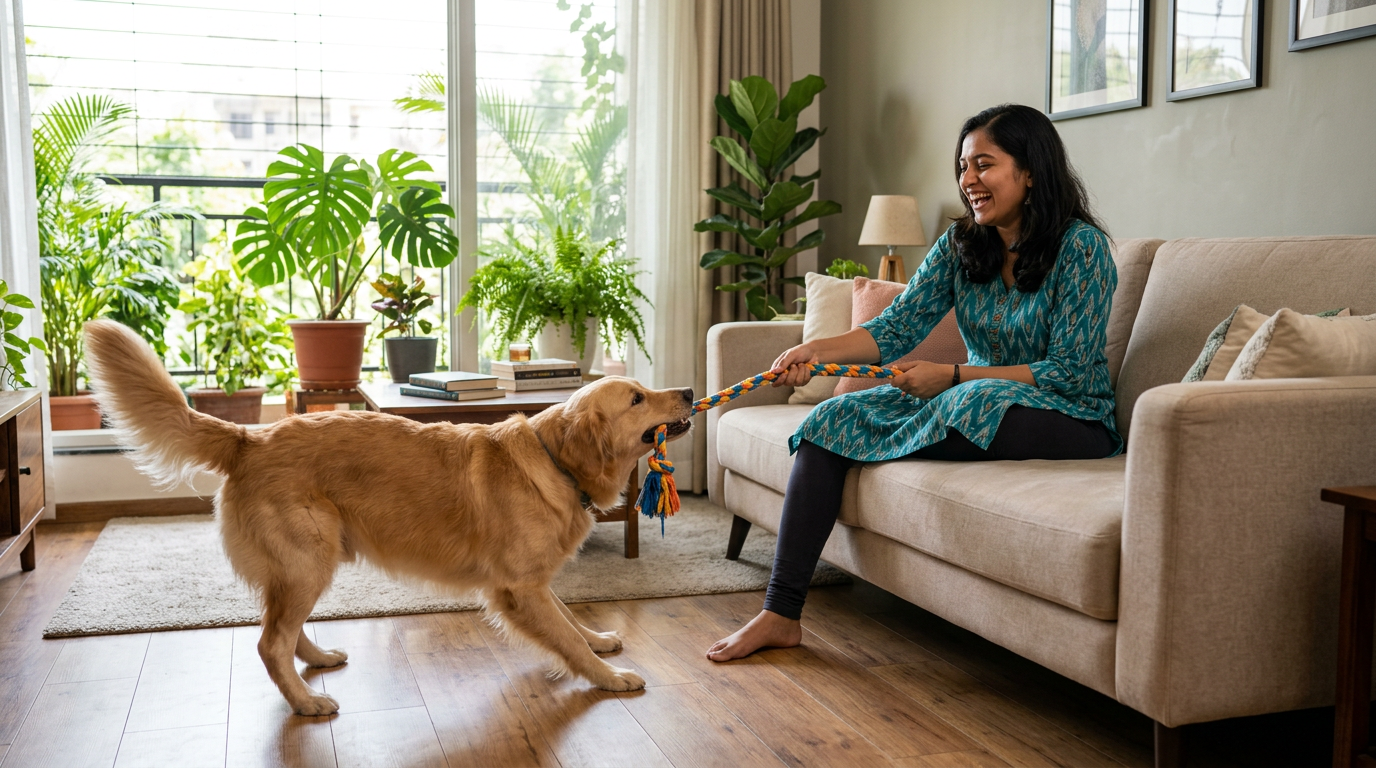
Play isn't a break from training — it's training. The cues you teach during games stick because your pet is having a great time.
Tug, played right
Teach "take it" and "drop it" within the game. Pause every minute or two to ask for a sit before resuming. Tug doesn't cause aggression — uncontrolled tug does.
Fetch as a reset
Two or three throws, then a short obedience break, then more throws. This pattern keeps arousal in check and turns fetch into a training tool.
Reading the room during play
A relaxed, loose-bodied dog with a soft mouth and voluntary breaks is playing well. Stiffness, hard staring, or a mouth that won't release on cue means it's time to pause the game and let things settle before continuing — not to power through for the sake of finishing the round.
Games for two-person households
Recall relays — calling the dog back and forth between two people with a treat or toy reward each time — build a rock-solid recall while feeling like pure fun to the dog. It's one of the few "drills" most dogs never get tired of.
End every game while your pet still wants more. They'll be eager to play again tomorrow.