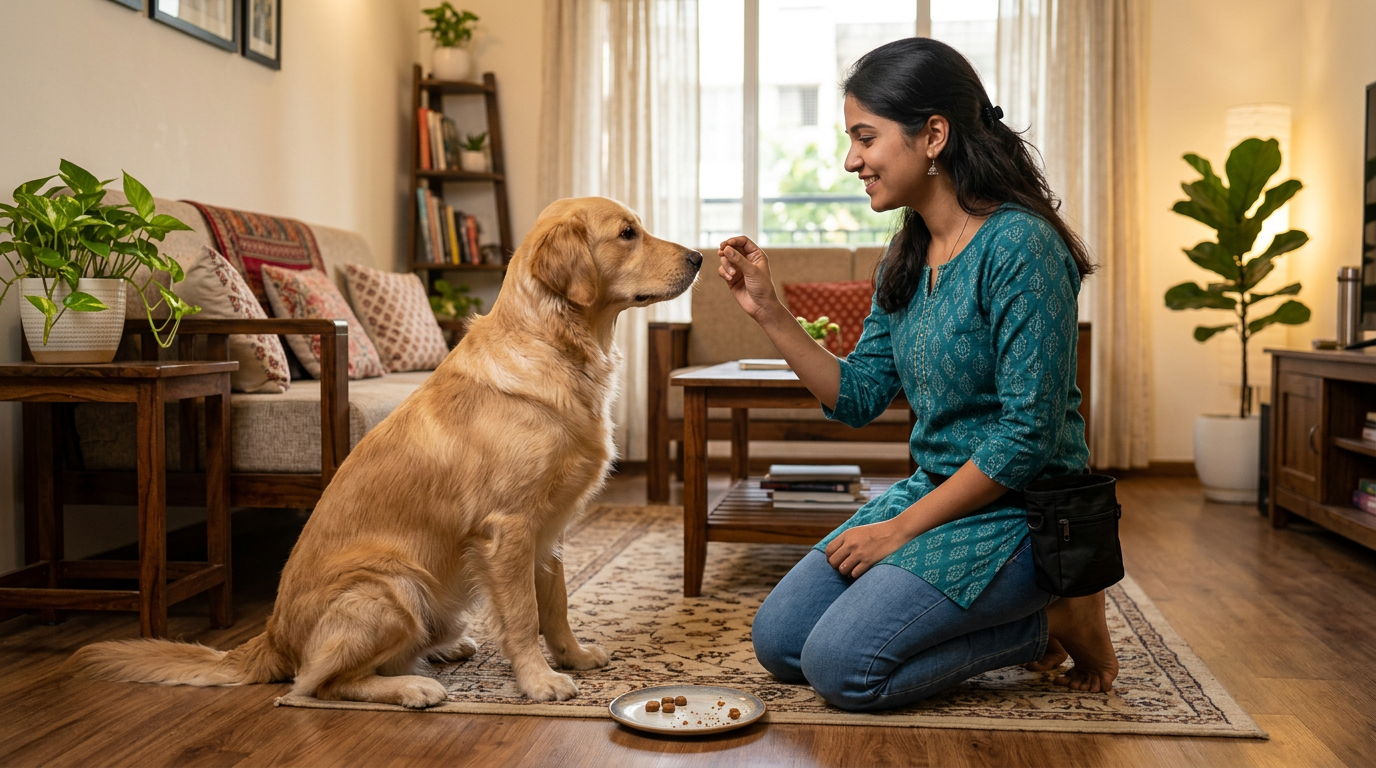
Training treats are different from regular treats. The criteria are practical: they need to be eaten fast, motivate hard, and not blow the daily calorie budget.
The four criteria
- Small — pea-sized or smaller for most dogs; rice-grain-sized for cats
- Soft — no crunching pauses
- Smelly — strong scents mean strong motivation
- Special — these aren't treats your pet gets on the couch
A tiered system
Use everyday treats for known cues, mid-value treats for proofing, and high-value treats (real meat, cheese) for new behaviors and high-distraction environments.
Homemade options that tick every box
Boiled chicken breast, small cubes of paneer, or freeze-dried liver are all easy to portion small, soft enough for fast eating, and high-value enough to compete with real-world distractions. Pre-cut a batch and freeze it in small portions so training treats are always ready without a last-minute kitchen scramble.
Weaning off treats without losing the behaviour
Once a cue is reliable, switch to rewarding randomly rather than every single time — an intermittent reward schedule keeps the behaviour strong while gradually reducing how often you actually need a treat in hand.
If you're running a 20-minute session, plan for about 50–100 tiny treats. Subtract that from the day's food calories so your pet doesn't silently gain weight.