Dalmatian
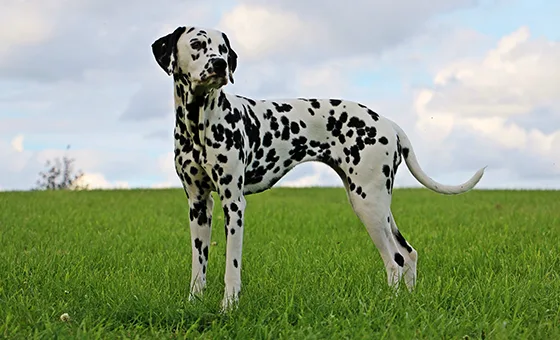 Croatia (Dalmatia region)
Breed Traits
About
Living with a Dalmatian is a bit like living with a friendly athlete who never retires. They are affectionate, playful and deeply attached to their people, and they want to be part of everything happening at home. Many are polite but reserved with strangers, which makes them good watchdogs without being aggressive. The flip side of all that stamina is that an under-exercised Dalmatian quickly becomes restless, noisy or destructive. If you enjoy morning runs, long walks and active weekends, you will find a loyal, funny and devoted companion. If you want a calm couch dog, this is probably not your breed.

Is the Dalmatian Right for You?
Ideal Home / Owner
An active family or runner who can give a Dalmatian long daily exercise, company and consistent training will get the best from this breed. It is not ideal for busy households where the dog would be alone for long hours or for owners wanting a low-energy pet.
Dalmatian History
The Dalmatian's exact origins are uncertain, and it is one of those breeds whose story is part record and part legend. Spotted dogs appear in European art from centuries ago, but the breed takes its name from Dalmatia, the coastal region of present-day Croatia, which the FCI recognises as its country of origin. By the late 1700s spotted dogs from the region were being described and illustrated under the name Dalmatian.
The breed was refined largely in England during the 18th and 19th centuries, where it found its true calling as a coach dog. Dalmatians trotted for miles alongside horse-drawn carriages, cleared the road ahead, kept the horses company and guarded the coach and stable at night. Their remarkable endurance and natural affinity for horses made them a fashionable accessory for wealthy households.
In the United States the Dalmatian became the classic firehouse dog. When fire engines were pulled by horses, the dogs ran ahead to clear the streets and calmed the horses at the scene of a fire, and many fire stations still keep one as a mascot. The American Kennel Club recognised the breed in 1888, and its fame grew enormously after Dodie Smith's novel and the Disney film 101 Dalmatians.
Today the Dalmatian is kept mainly as a family companion and sporting partner, enjoying activities such as running, agility and road trials. In India it is a familiar sight in metro cities and is recognised by the Kennel Club of India. Its film fame has sometimes led to impulse purchases, so buying from a health-tested breeder and understanding the breed's energy needs is important.
Diet
Dalmatians have a unique way of processing purines, which means they produce more uric acid than most dogs and are prone to urate bladder stones. A good quality, moderate protein diet that avoids very high purine foods such as organ meats, sardines and some game meats is usually recommended, along with plenty of fresh water to keep urine dilute. Portion food to keep your dog lean, as these are athletes rather than heavy dogs. Split meals into two per day. Your vet can advise on exact amounts and whether a special urinary diet is needed for your dog.
Weather & climate
Tireless and Outgoing
Dalmatians thrive on activity and company, adapting well to homes that keep them busy but struggling when bored or left alone.
Training
Dalmatians are intelligent and quick to learn, but they can also be strong-willed and easily bored by repetition. Short, upbeat sessions with food rewards and play work far better than harsh corrections, which tend to make them stubborn or anxious. Start socialisation early with different people, dogs, sounds and traffic so your puppy grows into a confident adult. Good lead manners matter, because an excited Dalmatian pulls hard. If your dog is deaf in one or both ears, hand signals and a vibration collar used kindly can work very well.
Grooming
The short coat looks low maintenance, and in terms of brushing it is, but Dalmatians shed a lot and all year round. Those stiff little white and dark hairs weave into sofas, clothes and car seats, so be ready for regular cleaning. A rubber curry brush or grooming mitt used a few times a week removes loose hair and keeps the coat glossy. Bathe only when needed, as frequent bathing dries the skin. Trim nails every few weeks, clean ears regularly and brush teeth several times a week. Watch for skin allergies, which can flare up in humid monsoon weather.

Health
Dalmatians are generally robust, but two breed-specific issues stand out: congenital deafness linked to the white spotting gene, and urate bladder stones caused by their unusual uric acid metabolism. Skin allergies, hip dysplasia and some eye conditions are also seen. Choose a breeder who hearing tests puppies and screens parents. In India, heat is a real concern for such an active breed. Exercise only in the early morning and late evening, avoid hot pavements, and watch for heavy panting, drooling or weakness. Their thin white coat also means pink skin can get sunburnt.