English Mastiff
 England
Breed Traits
About
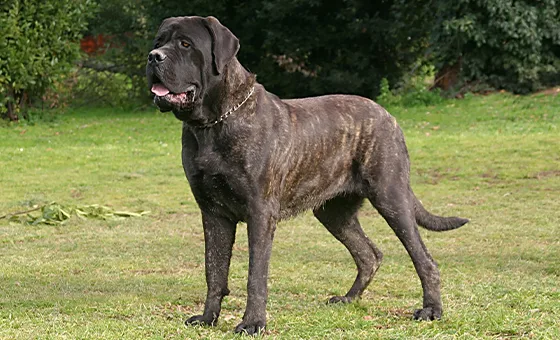
The English Mastiff is a calm, good-natured giant that is usually gentle and affectionate with its family. It is not a high-energy dog and is often content to lie quietly near its people. Mastiffs are naturally protective and their size alone deters intruders, though they are rarely aggressive without reason. They can be wary of strangers and need early socialisation. Their enormous size means even a friendly lean can knock someone over. Living with one involves drool, snoring and planning everything around a very large dog.
Is the English Mastiff Right for You?
English Mastiff History
The English Mastiff, often simply called the Mastiff, is an ancient breed with roots in Britain. Large mastiff-type dogs were present when the Romans invaded in 55 BCE, and Roman writers noted the size and courage of British dogs. Some were taken back to Rome, where they were used in arenas. Over centuries these dogs became established guardians of estates and homes.
In medieval England, Mastiffs guarded property and livestock and were also, sadly, used in cruel sports such as bear-baiting until these were banned in 1835. A well-known story tells of a Mastiff that guarded its wounded master, Sir Peers Legh, at the Battle of Agincourt in 1415, and its descendants are said to have founded the Lyme Hall line, though the details are partly legend.
The breed suffered greatly during the two World Wars, when food shortages made keeping giant dogs difficult. By the end of the Second World War very few Mastiffs remained in Britain. The breed was rebuilt with the help of dogs exported earlier to North America. The American Kennel Club had recognised the Mastiff in 1885, and breeders on both sides of the Atlantic worked together to restore numbers.
Today the English Mastiff is valued as a calm, loyal companion and guardian. In India it remains relatively rare, mostly kept by enthusiasts with large homes, and is better suited to cooler climates. Its enormous size, short lifespan and heat sensitivity mean it requires careful thought before purchase. Prospective owners should seek breeders who health test their dogs and be ready for the costs of a giant breed.
Diet
English Mastiff puppies grow extremely fast and need a large or giant-breed puppy food to support slow, steady growth and healthy joints. Adults need a quality giant-breed diet in measured portions, usually split into two or three meals. The breed is deep-chested and prone to bloat, so avoid exercise around mealtimes and discourage gulping. Keeping a Mastiff lean is vital, as extra weight puts enormous strain on joints and the heart. Provide fresh water at all times. Ask your vet for exact portions based on age and weight.
Weather & climate
Calm Gentle Giant
A dignified and affectionate guardian that loves a quiet home life but needs space and protection from heat.
Training
Mastiffs are intelligent but can be stubborn and slow to respond, so patience is essential. Use gentle, reward-based training, as harsh methods tend to make them shut down. Start early with lead walking, polite greetings and basic obedience while your puppy is still manageable. Socialisation with people, places and other dogs helps them stay confident and calm. Keep sessions short and positive. Avoid forced exercise, long runs and jumping in puppies, as their joints are still developing for well over a year.
Grooming
The Mastiff's short coat is easy to care for, needing a weekly brush with a rubber mitt or bristle brush. It sheds moderately, more during seasonal changes. Wipe the face and facial folds daily to manage drool and prevent skin irritation, especially in humid weather. Clean the ears weekly and check the eyes, as some Mastiffs have droopy lids. Trim nails regularly, as long nails affect movement in such a heavy dog. Bathing a Mastiff is a big job, so do it only when needed and dry the folds well.

Health
The English Mastiff has a short lifespan and several health concerns, including hip and elbow dysplasia, bloat, heart disease, eyelid problems, progressive retinal atrophy, cystinuria and bone cancer. Choose breeders who health test their dogs. Heat is a major risk in India. The Mastiff's giant body and shorter muzzle make it prone to overheating, so it should live indoors with air conditioning or strong cooling during summer. Exercise only in the coolest hours, provide shade and water and watch closely for heavy panting or weakness.